This post may contain affiliate links. If you purchase through these links, I may earn a small commission at no extra cost to you. This helps keep Pine+Mango running. Thank you for your support! Read our full disclosure here.
You want to eat healthier. More plants, more energy, less junk. But the second you picture yourself chopping, sautéing, and meal-prepping like some kind of wellness influencer, you check out completely.
I get it. I really do.
Here’s what you need to know: eating more plants doesn’t require cooking. Not in the way you think, anyway.
Some of the most nourishing, satisfying plant-forward meals come together in five minutes flat — no recipe, no culinary skills, no stress.
If you’ve been waiting until you “get into cooking” to start eating better, this is your permission slip to stop waiting.
Subscribe to Our Nourished Newsletter
Get free weekly guidance for your plant-based journey, straight to your inbox.
Why Simple Wins Every Time
There’s a reason complicated meal plans fail. It’s not a willpower problem. It’s a friction problem.
The more steps between you and your food, the easier it is to give up and grab something fast and familiar.
Research backs this up.
One study found that people who prepared food at home more frequently had higher diet quality overall — but the key factor wasn’t skill, it was simplicity and consistency.
When eating well feels manageable, you actually do it.
Plants are, by nature, the easiest food group to work with. Many of them require zero cooking. Fruit. Raw veggies. Nuts. Seeds. Canned beans. Pre-cooked grains.
The building blocks are already there.
Meet the Meal Blueprint Method
Before we get into specific meals, here’s the framework I use for everything.
It’s called the Meal Blueprint Method, and it’s the simplest way to put together a satisfying, nourishing plate without thinking too hard.
Base + Protein + Produce + Flavor/Fat
That’s it. Four components. Mix and match. No recipe required.
- Base: cooked grains (rice, quinoa, farro), leafy greens, or whole grain bread
- Protein: canned chickpeas, lentils, black beans, edamame, tofu, hemp seeds
- Produce: whatever’s in your fridge — sliced cucumber, cherry tomatoes, shredded carrots, baby spinach, frozen corn
- Flavor/Fat: tahini, olive oil, lemon juice, salsa, hummus, avocado, nut butter
Every meal idea below follows this exact pattern. Once you see it, you can’t unsee it.
Easy Plant-Based Meals With No Cooking Skills Required
The 5-Minute Bowl
This is the workhorse.
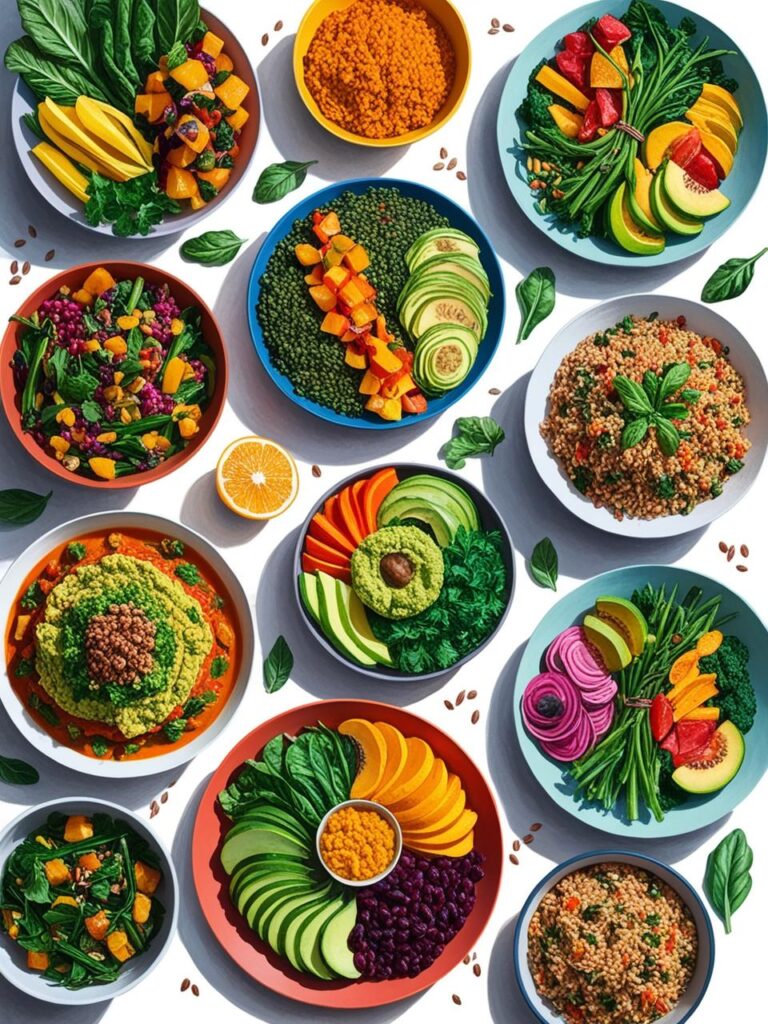
Grab a bowl, layer in a scoop of pre-cooked rice or quinoa (buy the microwavable pouches — zero shame), add a handful of baby spinach, dump in half a can of rinsed chickpeas, pile on some cherry tomatoes, and drizzle with tahini and lemon juice.
Done.
It sounds too simple to be real food. But it’s genuinely satisfying, and it covers fiber, plant protein, healthy fat, and a solid spread of micronutrients in one bowl. No knife skills needed.
The Loaded Wrap
Whole grain tortilla. Hummus spread across the whole thing. A handful of mixed greens. Sliced avocado or a few strips of roasted red pepper from a jar. Shredded carrots.
Roll it up. That’s a meal.
If you want to go next level without much extra effort, add a spoonful of canned white beans or some thinly sliced cucumber. Wraps are incredibly forgiving — nothing has to be perfect or precise.
The Big Snack Plate
Some days you just don’t want a “meal.” That’s fine. A snack plate done right is absolutely a legitimate dinner.
Arrange some of these on a plate or cutting board: apple slices, a handful of walnuts, hummus, raw veggies (snap peas, baby carrots, sliced bell pepper), a few whole grain crackers, and maybe a small handful of olives.
This approach is actually rooted in intuitive eating principles — eating a variety of whole foods without rigidly structuring them into “meal” formats can reduce the mental load around eating significantly.
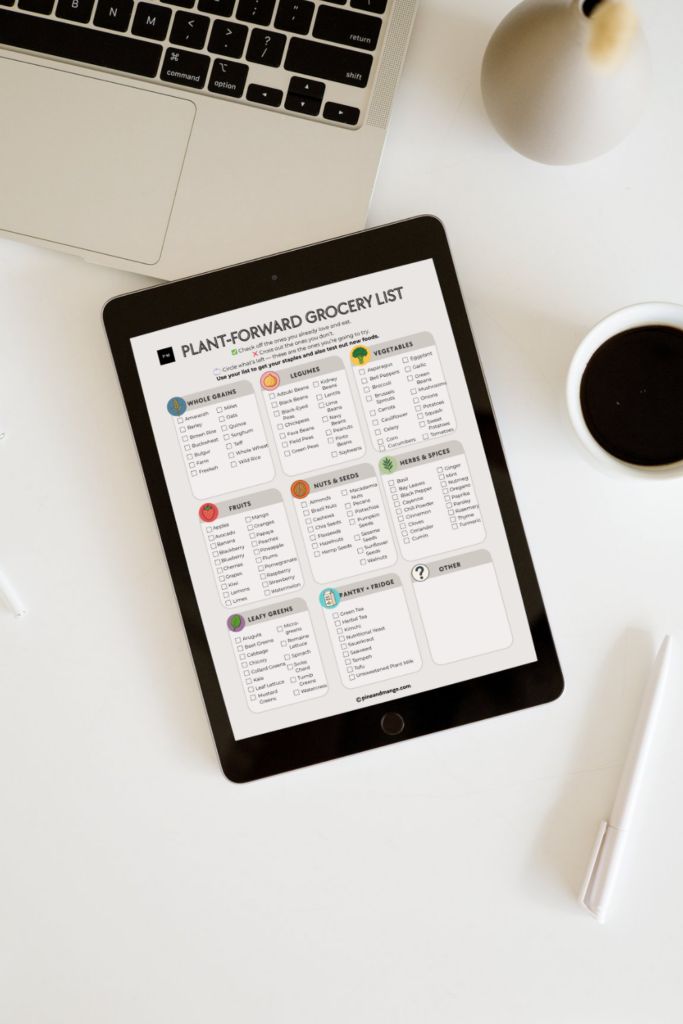
Get Your FREE Plant-Forward Grocery List Today!
The No-Cook Overnight Oats
Make these the night before in about three minutes. Combine ½ cup rolled oats with ¾ cup plant milk in a jar, stir in a spoonful of chia seeds and a little maple syrup, and top with whatever fruit you have.
Refrigerate overnight. In the morning, breakfast is already done.
Oats are a fantastic base. They’re high in beta-glucan fiber, which research has linked to improved heart health and steadier blood sugar levels. Add nut butter on top if you want more staying power.
The Pantry Green Bowl
Keep a bag of pre-washed salad greens, a can of lentils, and a bottle of good olive oil in your kitchen at all times. That’s honestly the whole strategy.
Warm the lentils in the microwave, dump them over greens, add whatever produce is around, hit it with olive oil, salt, and a squeeze of lemon.
Lentils are quietly one of the most nutritious foods on the planet. One cup of cooked lentils provides about 18 grams of protein and 15 grams of fiber. And canned or pre-cooked lentils need zero prep.
What to Keep Stocked (So You’re Never Stuck)
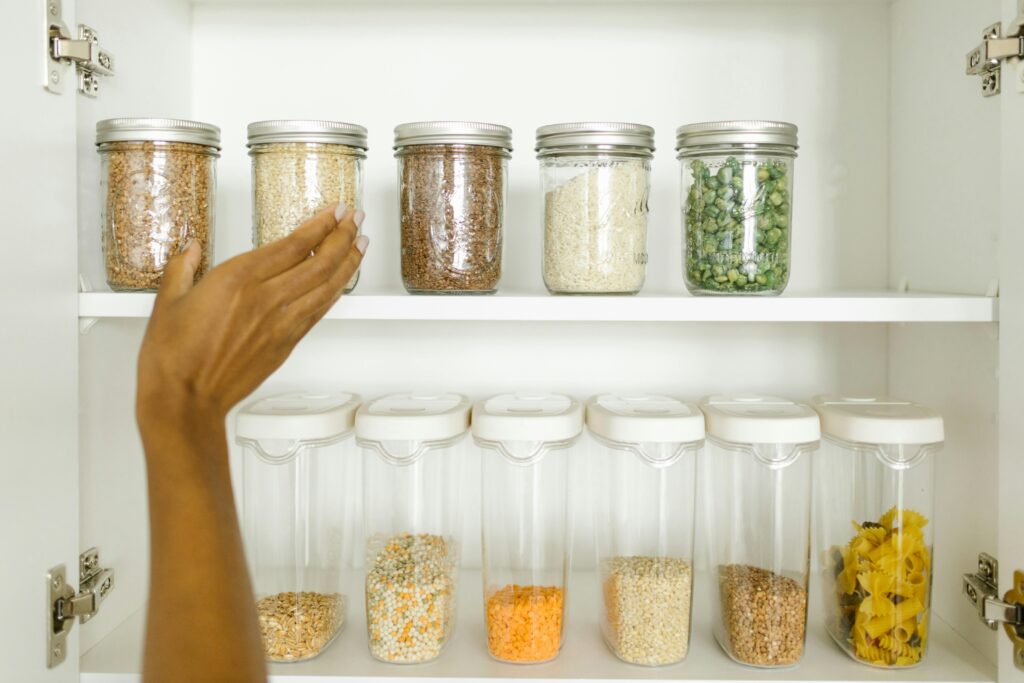
Quick plant-based meals only work if your kitchen isn’t empty. You don’t need much, but you do need the right things. Here’s a short list to start with:
Pantry:
- Canned chickpeas, black beans, and lentils
- Microwavable rice or quinoa pouches
- Whole grain tortillas or wraps
- Nut butter (almond, peanut, sunflower seed)
- Tahini
- Olive oil
- Rolled oats
Fridge:
- Baby spinach or mixed greens (pre-washed)
- Hummus
- Plant-based milk
- Lemons or limes
Freezer:
- Frozen edamame
- Frozen corn or peas
- Frozen fruit for smoothies
With these basics on hand, you can build a solid plant-forward meal in minutes, every single time.
Frequently Asked Questions
Q: Can I actually get enough nutrition from plant-based meals if I barely cook?
Yes, genuinely. The key is variety over time, not perfection at every single meal.
Beans, lentils, whole grains, nuts, seeds, and a wide range of fruits and vegetables cover most of your nutritional bases beautifully.
If you’re eating a varied mix across the week, you’re in good shape.
Q: What if I don’t like most vegetables?
Start with the ones you already tolerate — even just one or two. Cherry tomatoes, corn, avocado, and cucumber are mild and easy for most people.
Over time, your taste preferences genuinely shift when you eat more whole foods regularly. It’s not instant, but it happens.
Q: How do I make plant meals actually filling?
Fat and fiber are your best friends here. Make sure every meal has a protein source (beans, lentils, seeds, tofu) and a healthy fat (avocado, tahini, olive oil, nut butter).
Those two components are what take a meal from “a snack” to something that actually holds you.
📖 Good Reads: How Not to Die, The China Study and Plant-Based Nutrition
In Essence: You Don’t Have to Love Cooking to Eat Well
Here’s the truth: the idea that healthy eating requires hours in the kitchen is a myth.
A well-stocked pantry and a simple framework are all you need to start nourishing your body with more plants — today, not someday.
The Meal Blueprint Method is your guide every time you open the fridge and have no idea what to make.
It’s not about being creative or following a recipe. It’s about putting real food on your plate in the simplest way possible and letting your body do the rest.
Start with one meal this week. Just one. See how it feels. Progress, not perfection — always.
⭐ I’d love to hear from you: which of these meal ideas feels most doable for where you are right now? Drop it in the comments below — your answer might be exactly what someone else needs to hear.