This post may contain affiliate links. If you purchase through these links, I may earn a small commission at no extra cost to you. This helps keep Pine+Mango running. Thank you for your support! Read our full disclosure here.
Some days, cooking feels heroic. Other days? You’re staring at the fridge at 6pm, exhausted, and the idea of chopping one more vegetable feels genuinely offensive.
I know that feeling. And here’s what I want you to know: eating more plants does not have to be a production.
Lazy plant-based meals are not a compromise. They’re actually the whole point.
Subscribe to Our Nourished Newsletter
Get free weekly guidance for your plant-based journey, straight to your inbox.
- Why "Lazy" Is a Feature, Not a Bug
- The Meal Blueprint Method: Your No-Recipe Formula
- Simple Plant-Forward Meals You Can Make in Minutes
- Stock These and You're Always 10 Minutes From a Meal
- What About Nutrition? Are These Meals Actually Enough?
- Frequently Asked Questions
- In Essence: It Doesn't Have to Be Hard
- Subscribe to Our Nourished Newsletter
Why “Lazy” Is a Feature, Not a Bug
There’s this idea floating around that eating well has to be complicated. Meal prep Sundays, elaborate recipes, fourteen ingredients you’ve never heard of.
No wonder people give up. The truth is, the simpler your approach to plant-forward eating, the more likely you are to stick with it long-term.
Research backs this up. One study found that people who ate more whole plant foods had significantly better health outcomes.
And the foods driving that? Simple stuff. Beans, whole grains, vegetables, fruit. Nothing fancy required.
Simplicity isn’t laziness. It’s sustainability.
The Meal Blueprint Method: Your No-Recipe Formula
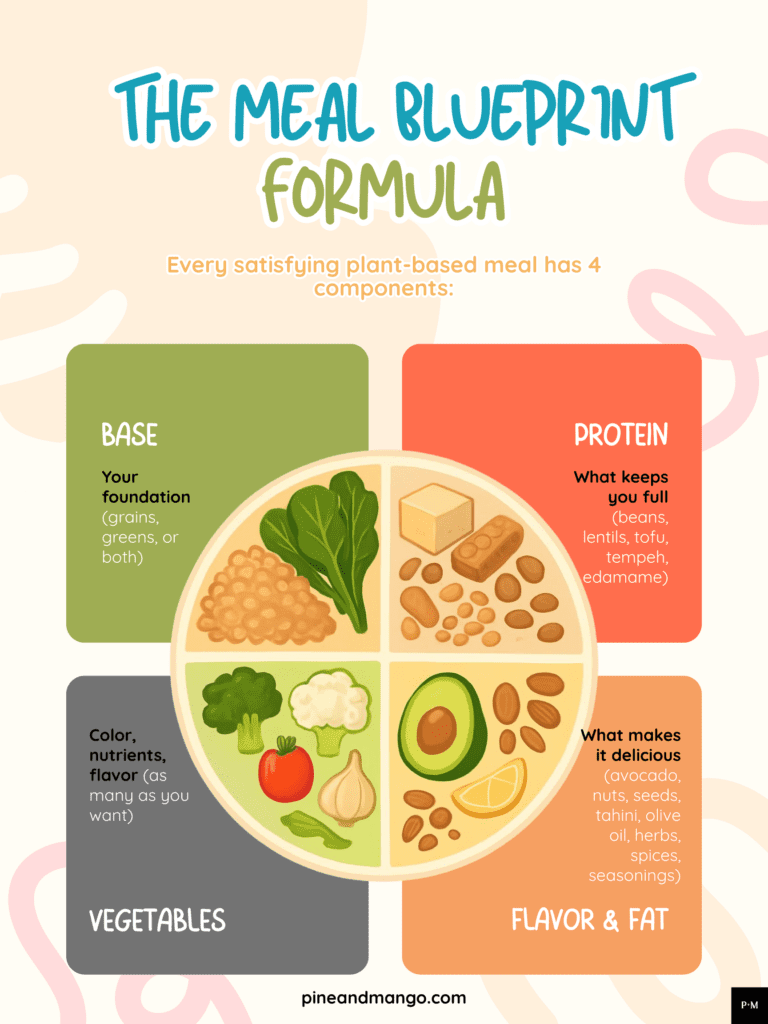
This is the framework I come back to every single time I don’t feel like thinking. It’s called the Meal Blueprint Method, and it has four parts:
Base + Protein + Produce + Flavor/Fat
That’s it. You’re not following a recipe. You’re building a plate.
Here’s how each piece works:
- Base — Something filling and starchy. Think cooked rice, quinoa, rolled oats, whole grain bread, or even a baked sweet potato. These are your energy anchors.
- Protein — Canned chickpeas, black beans, lentils, edamame, tofu, or tempeh. Canned beans are your best friend on a lazy day. Open, drain, rinse. Done.
- Produce — Raw, roasted, or frozen. Baby spinach straight from the bag. Frozen corn microwaved in two minutes. Sliced cucumber. Cherry tomatoes. Whatever’s in the fridge.
- Flavor/Fat — This is where the magic happens. A drizzle of olive oil, tahini, salsa, soy sauce, hot sauce, hummus, or even just lemon juice and salt. This is what transforms a bowl of random ingredients into something that actually tastes good.
Mix and match. Rotate. Repeat. The Blueprint removes the mental load of “what do I even make,” and that’s exactly the kind of support your brain needs on tired days.
Simple Plant-Forward Meals You Can Make in Minutes
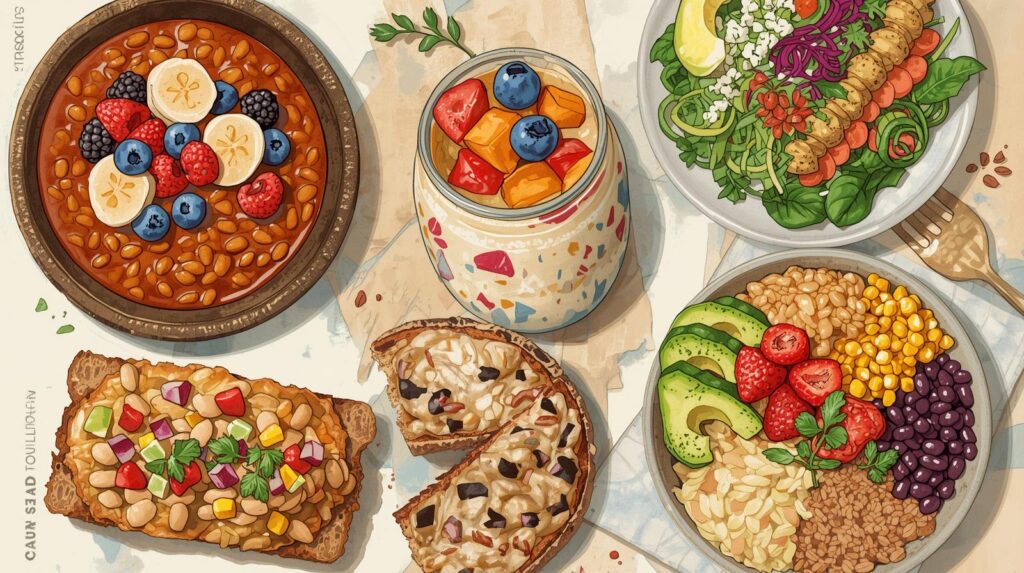
Let me show you what the Blueprint looks like in real life. These aren’t recipes. They’re combinations.
- The Lazy Bowl Brown rice (from a microwavable pouch) + canned black beans + frozen corn + salsa + avocado. Five ingredients. Ten minutes. Actually delicious.
- The Smash Toast Whole grain bread + white beans smashed with a fork + olive oil + lemon + salt + sliced tomato. No cooking involved at all, unless you count toasting bread.
- The Big Salad That Actually Fills You Up Leafy greens + chickpeas + shredded carrots + cucumber + sunflower seeds + tahini dressing. The tahini is the move. It adds fat, creaminess, and flavor all at once.
- The One-Pot Lentil Situation Red lentils cook fast, about 15-20 minutes, no soaking needed. Simmer them in vegetable broth with canned tomatoes, cumin, and garlic. Done. Red lentils practically fall apart into a thick, comforting stew all on their own.
- The Overnight Oat Non-Recipe Rolled oats + plant milk + chia seeds + whatever fruit you have. Stir it in a jar the night before. Wake up to breakfast that’s already done. No thinking required in the morning.
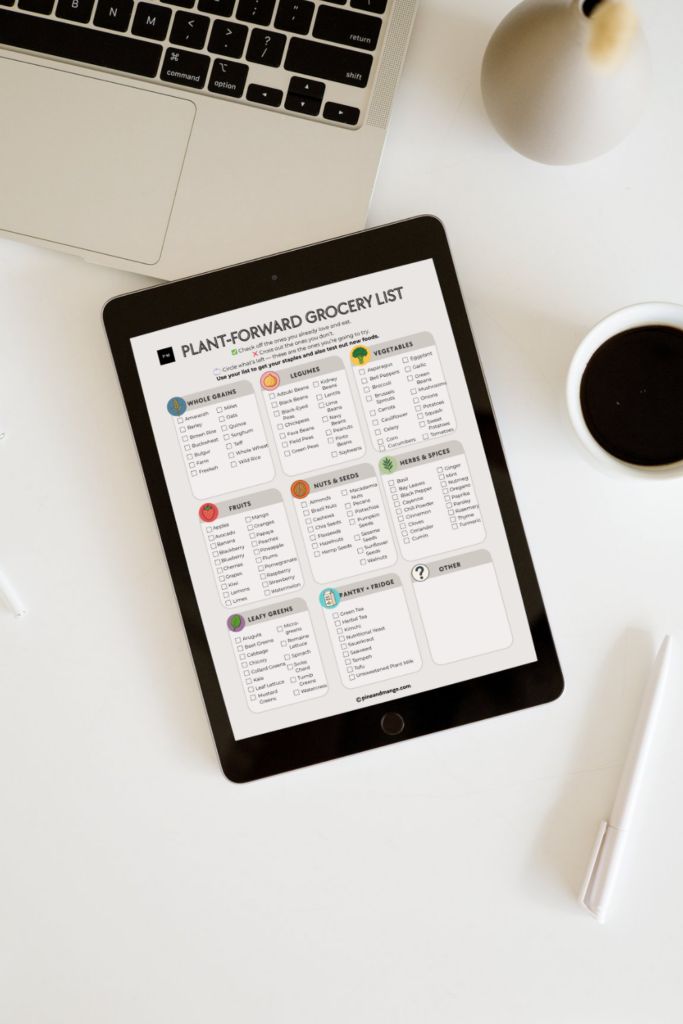
Get Your FREE Plant-Forward Grocery List Today!
Stock These and You’re Always 10 Minutes From a Meal
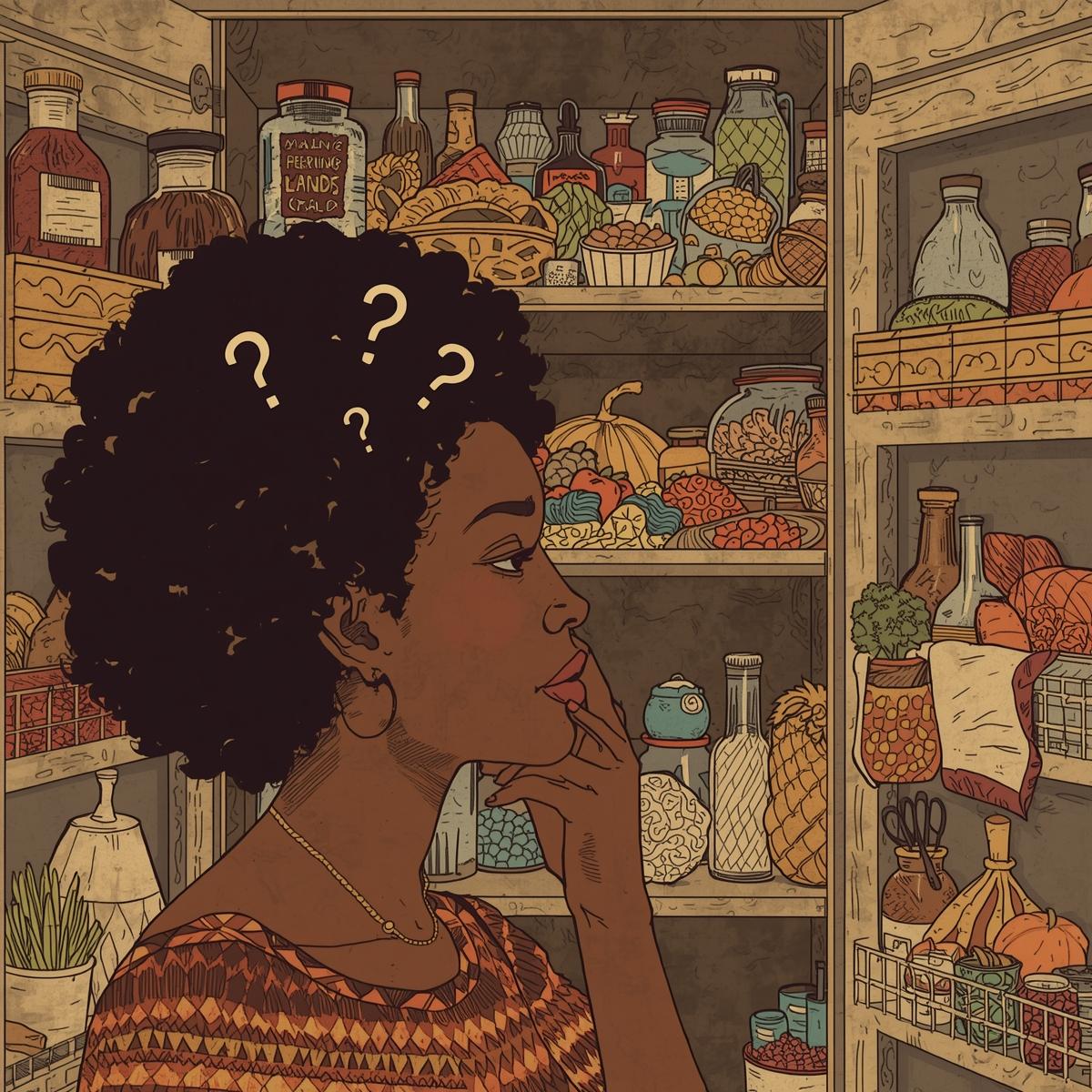
Here’s what made the biggest difference for me: having the right stuff already in the house.
When the pantry is stocked with plant staples, lazy meals become genuinely effortless. You’re not scrambling. You’re assembling.
Keep these on hand:
- Canned beans (black, chickpea, white, lentil)
- Microwavable grain pouches or a bag of dry rice/quinoa
- Frozen vegetables (corn, peas, edamame, broccoli, spinach)
- Whole grain bread or wraps
- A jar of tahini, some salsa, soy sauce, and hot sauce
- Canned diced tomatoes
- Olive oil and a good sea salt
- Lemons (always lemons)
When these are stocked, the question changes from “what do I make” to “what do I feel like today.” That’s a much better place to be.
What About Nutrition? Are These Meals Actually Enough?
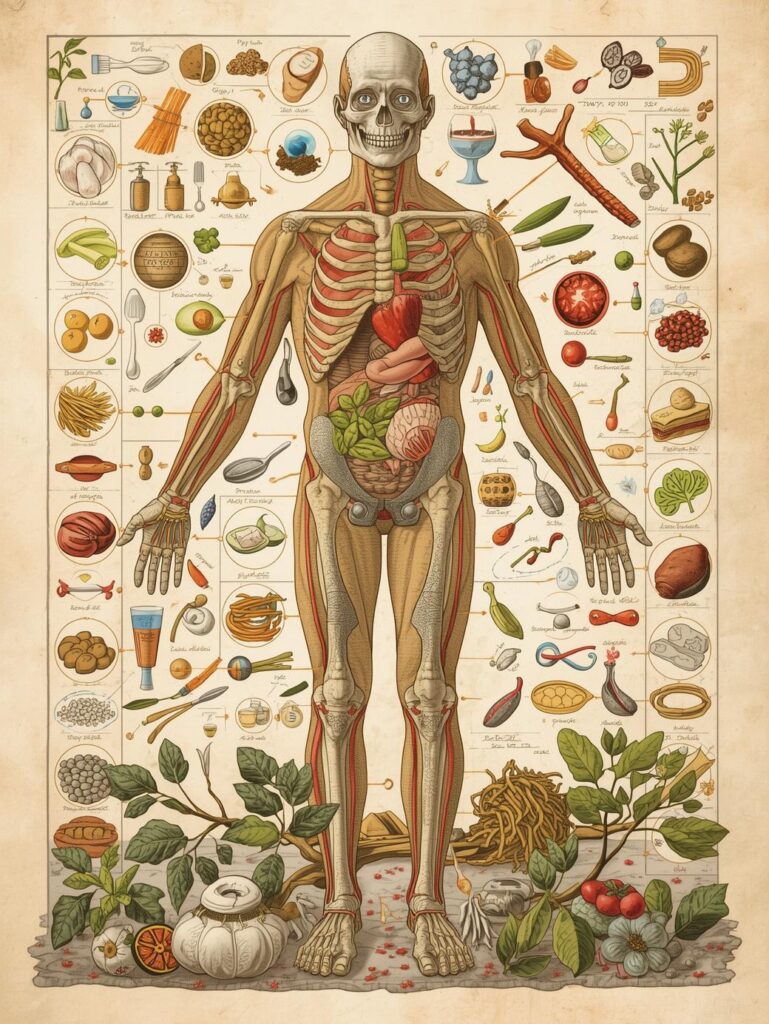
Fair question. Here’s the honest answer: yes, when you’re eating a variety of whole plant foods across your day, you are covering your nutritional bases far better than most people realize.
Beans and legumes are loaded with protein and fiber. Whole grains provide sustained energy and B vitamins. Dark leafy greens deliver calcium, iron, and folate.
Healthy fats from tahini, avocado, and olive oil support brain function and help your body absorb fat-soluble nutrients like vitamins A, D, E, and K.
A substantial body of research consistently show that plant-rich eating patterns support heart health, healthy body weight, stable blood sugar, and reduced inflammation.
You don’t need a complicated plan. You need a consistent pattern.
One thing worth knowing: vitamin B12 is not reliably found in plant foods, so if you’re shifting toward mostly plant-based eating, a B12 supplement is worth adding.
That’s not a scare tactic, just a practical heads-up.
Frequently Asked Questions
Q: Can I actually get enough protein from lazy plant-based meals?
Yes. A cup of cooked lentils has about 18 grams of protein. A cup of chickpeas has around 15 grams. Black beans, edamame, tofu, tempeh, even quinoa all contribute meaningful amounts.
When you’re eating beans, grains, and vegetables throughout the day, protein adds up quickly without any obsessive tracking required.
Q: What if I don’t like cooking? Can I still eat this way?
Absolutely, and honestly, this approach was made for you.
Microwavable grain pouches, canned beans, pre-washed greens, frozen vegetables, and store-bought hummus or salsa mean you can build a solid meal without turning on the stove.
The Blueprint works with assembly, not just cooking.
Q: Is this approach okay for long-term eating or is it just a starting point?
It’s both. The Meal Blueprint Method is flexible enough to serve you as a beginner and stick with you as your cooking confidence grows.
Some weeks you’ll cook more. Some weeks you’ll assemble more. That’s not failure. That’s just real life, and this way of eating bends to fit it.
📖 Good Reads: How Not to Die, The China Study and Plant-Based Nutrition
In Essence: It Doesn’t Have to Be Hard
The biggest shift I made was letting go of the idea that eating well had to feel like work. It doesn’t.
Some of the most nourishing meals I’ve had were thrown together in ten minutes out of what was already in the kitchen.
Progress over perfection is not just a nice phrase here. It’s the actual strategy.
One lazy plant-forward meal is better than none. One bowl of beans and rice is better than skipping nourishment because you didn’t have the energy for something elaborate.
Start with what you have. Use the Blueprint. Let it be imperfect.
Your body doesn’t need Instagram-worthy meals. It needs consistent, real, plant-forward nourishment. And that, you can absolutely do.
⭐ Let’s Chat: What’s your go-to lazy plant meal? Drop it in the comments. Bonus points if it’s embarrassingly simple, because those are usually the best ones.