This post may contain affiliate links. If you purchase through these links, I may earn a small commission at no extra cost to you. This helps keep Pine+Mango running. Thank you for your support! Read our full disclosure here.
You know that sinking feeling when you find a “healthy” recipe online, scan the ingredient list, and realize you’d need to hit three different stores just to make Tuesday’s dinner?
Yeah, I’ve been there too. Standing in my kitchen at 6 PM, hungry and tired, staring at a recipe that called for “preserved lemon” and “sumac” and wondering why eating well had to feel like a culinary school exam.
Here’s what I discovered after years of chasing recipes and feeling like I was constantly failing: you don’t actually need recipes to eat plant-based foods consistently.
What you need is an understanding of how to build plant-based meals with a simple framework—a blueprint you can follow with whatever ingredients you have on hand.
That’s exactly what the Meal Blueprint Method gives you.
It’s not another rigid system with rules to follow. It’s a flexible approach that teaches you how meals work so you can build them confidently, without instructions, without stress, and without special ingredients.
Let me show you how this changes everything.
Subscribe to Our Nourished Newsletter
Get free weekly guidance for your plant-based journey, straight to your inbox.
- The Pine+Mango Philosophy: From Restriction to Nourishment
- The Meal Blueprint Explained
- The Blueprint in Action: Real Meal Examples
- How the Blueprint Removes Overwhelm
- Getting Started with the Meal Blueprint Method
- Why This Method Works When Everything Else Failed
- Common Questions About How to Build Plant-Based Meals
- Q: Do I have to use all four components in every single meal?
- Q: What if I hate cooking and don't want to do anything complicated?
- Q: How do I know I'm getting enough nutrients without tracking everything?
- Q: Can my family eat this way too, or is this just for me?
- Q: What about when I'm really craving something specific that doesn't fit the blueprint?
- In Essence: Build Your Meals
- Subscribe to Our Nourished Newsletter
Quick Answer: How to Build Plant-Based Meals Without Recipes
Use the Meal Blueprint Method—a simple 4-component framework:
1. Base – Choose your energy source (grains, potatoes, legumes, bread)
2. Produce – Add vegetables and/or fruits (fresh, frozen, or canned)
3. Protein – Include beans, lentils, tofu, tempeh, or edamame
4. Flavor – Combine fat + acid + seasoning for satisfaction
Pick one item from each category, combine them however sounds good, and you have a complete meal. No recipe needed.
The Pine+Mango Philosophy: From Restriction to Nourishment
Before we dive into how to build plant-based meals, you need to understand the philosophy behind it—because this isn’t just about what to eat.
It’s about completely changing your relationship with food.
Why Traditional Approaches Keep You Stuck
Most people come to plant-based eating from a place of restriction. They’re thinking about what they need to cut out, eliminate, or avoid. The focus is on deprivation, not abundance.
Then they try to follow complicated recipes that require perfect execution and specialty ingredients.
When it doesn’t work out (like missing an ingredient or the dish doesn’t taste right), it feels like failure. They order takeout again, feeling defeated.
This creates a cycle: restriction leads to complexity, complexity leads to overwhelm, overwhelm leads to giving up.
The Pine+Mango Reframe: Plant-Abundance Mindset
Here’s the shift that changes everything: instead of focusing on what you’re removing, focus on what you’re adding.
Plant-abundance means you’re not depriving yourself. You’re discovering how many delicious, nourishing foods exist that you might have been overlooking.
You’re expanding your world, not shrinking it.
And when you combine this abundance mindset with a simple framework instead of complicated recipes, eating well becomes as natural as getting dressed in the morning.
Progress Over Perfection
The Meal Blueprint Method isn’t about doing everything perfectly. It’s about making it so easy to feed yourself nourishing food that you actually do it consistently.
Some nights you’ll build elaborate bowls with six different vegetables. Other nights it’ll be rice, beans, and salsa.
Both count. Both nourish you. They both move you forward.
The magic isn’t in the complexity, it’s in the consistency. And consistency only happens when you remove the barriers that make eating well feel hard.
👉🏿 To learn more, check out the Beginner’s Guide to Eating More Plants.
The Meal Blueprint Explained
Let me break down exactly how this framework works and why it removes the overwhelm that keeps most people stuck.
What Is a Blueprint?
A blueprint is a template, a pattern you can follow and adapt. Think of it like a formula.
In construction, a blueprint shows you where the walls go, but you get to choose the paint color, the fixtures, the finishing touches. The structure stays the same, but the details are flexible.
That’s exactly what the Meal Blueprint Method does for your eating.
It gives you the structure (the components every satisfying meal needs) while leaving the specifics up to you (which exact foods you choose based on what you have and what sounds good).
Why Frameworks Beat Recipes
Recipes create dependency. They tell you exactly what to do, step by step, but they don’t teach you how meals actually work. When you don’t have the exact ingredient or when something goes wrong, you’re stuck.
Frameworks create independence.
Once you understand how to build plant-based meals, you can make thousands of different combinations without ever looking up another recipe.
You know what components you need and how they work together.
This is the difference between memorizing answers and understanding math. One keeps you dependent on external instructions. The other gives you a tool you can use forever.
The Four Components Explained
Every satisfying plant-based meal needs these four elements. Miss one, and you’ll either be hungry an hour later or the meal will taste bland and boring.
Component 1: Base (Energy Source)
This is your foundation—the starchy food that provides sustained energy and keeps you full. Without this, you’ll be raiding the pantry before bed wondering why you’re still hungry.
Options include:
- Whole grains: rice (brown, white, wild), quinoa, oats, barley, farro, millet
- Starchy vegetables: potatoes, sweet potatoes, winter squash
- Pasta or noodles: whole wheat, rice noodles, soba
- Bread: whole grain, sourdough, tortillas, pita
- Legumes as base: beans, lentils, chickpeas (these count as both base AND protein)
Pick one. Just one. You don’t need three different grains in a single meal.
Component 2: Produce (Nutrients & Fiber)
This is where your vitamins, minerals, antioxidants, and fiber come from. Load this up—seriously, pile it on.
Raw options work great when you’re tired:
- Leafy greens: spinach, kale, romaine, arugula, mixed greens
- Crunchy vegetables: bell peppers, cucumbers, carrots, celery, radishes
- Tomatoes, onions, sprouts, fresh herbs
Cooked options when you want something warm:
- Roasted: broccoli, cauliflower, Brussels sprouts, zucchini, eggplant
- Steamed: green beans, asparagus, bok choy
- Sautéed: mushrooms, peppers, spinach, kale
Frozen vegetables are your secret weapon here. They’re picked at peak ripeness, often more affordable than fresh, and require zero prep work.
I always keep frozen broccoli, spinach, mixed vegetables, and peas in my freezer.
Component 3: Protein (Satisfaction & Building Blocks)
Your body needs protein for repair, maintenance, and countless functions. Include protein-rich foods and you’ll stay satisfied longer.
Whole food options:
- Beans: black beans, pinto beans, kidney beans, white beans, navy beans
- Lentils: brown, green, red (red lentils cook fastest)
- Chickpeas (garbanzo beans)
- Tofu: firm, extra-firm, silken (for different textures)
- Tempeh: fermented soybeans with a nutty flavor
- Edamame: young soybeans, available frozen and shelled
Don’t stress about quantities or obsess over “complete proteins”—that’s outdated science. Just include some protein-rich plant foods throughout your day and your body handles the rest beautifully.
Component 4: Flavor (The Make-or-Break Element)
This is where people mess up most often. They build technically complete meals that taste like cardboard and wonder why they’re not motivated to keep eating this way.
Flavor comes from three subcategories—you need all three:
Fat source (for nutrient absorption and satisfaction):
- Avocado or guacamole
- Nuts: almonds, cashews, walnuts, pecans
- Seeds: pumpkin seeds, sunflower seeds, hemp seeds, chia seeds
- Nut butters: peanut butter, almond butter, tahini
- Olives
Acid (brightens everything and balances flavors):
- Lemon or lime juice
- Vinegar: balsamic, apple cider, rice vinegar, red wine vinegar
- Tomatoes or salsa
- Pickled vegetables
Seasoning (makes it actually taste good):
- Fresh or dried herbs: basil, cilantro, parsley, oregano, thyme
- Spices: cumin, paprika, turmeric, chili powder, curry powder
- Aromatics: garlic, onion (fresh or powdered)
- Condiments: hot sauce, tamari, soy sauce, coconut aminos
- Nutritional yeast (cheesy, savory flavor)
- Salt and pepper (don’t skip the salt—it makes everything taste better)
Fat helps your body absorb nutrients and keeps you satisfied. Acid brightens everything up and prevents that “blah” feeling. Seasoning makes it taste like actual food you want to eat, not rabbit food you’re forcing down.
Build Your Plant-Based Blueprint for FREE Today!
The Blueprint in Action: Real Meal Examples
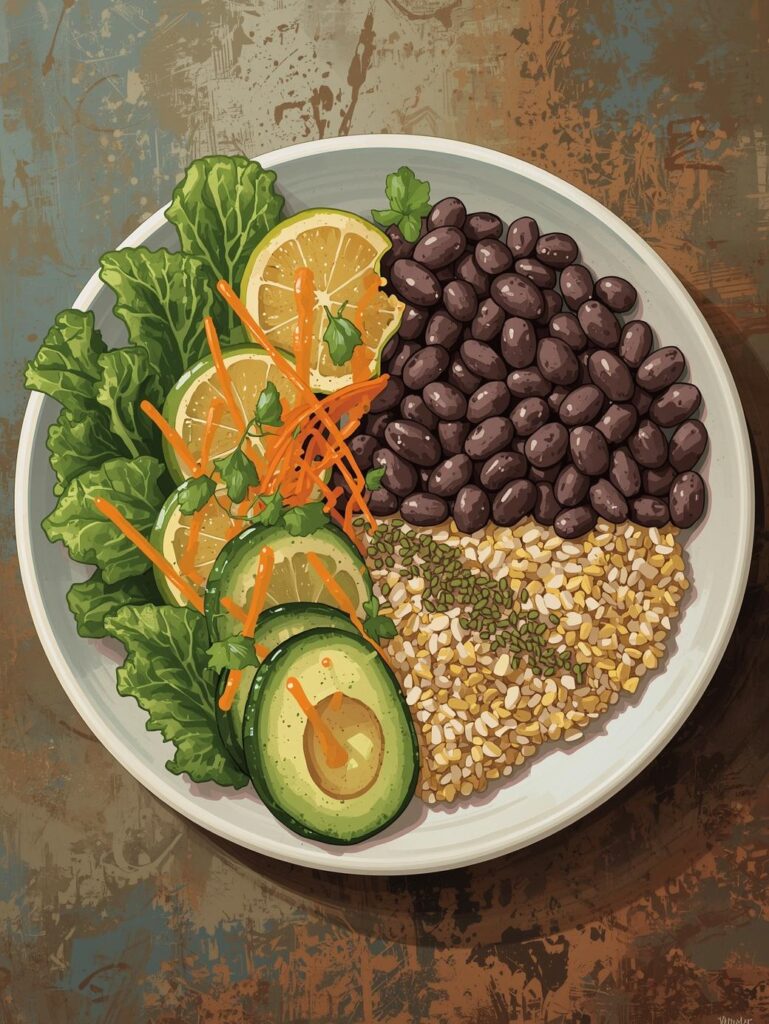
Let me show you what this looks like in real life—not the Instagram-perfect version, but the actual Tuesday night version when you’re tired and just need to eat.
Example 1: The Basics Bowl
🌾 Base: Brown rice (cooked a batch on Sunday, reheated)
🥦 Produce: Bag of frozen broccoli, microwaved for 3 minutes
🫘 Protein: Can of black beans, rinsed
🥑 Flavor:
- Fat: Half an avocado, mashed
- Acid: Squeeze of lime juice
- Seasoning: Salt, cumin, hot sauce
Total time: 5 minutes. Total recipe following: zero.
This is my go-to when my brain is fried and I just need food. It’s not fancy, but it checks every box my body needs.
Example 2: The Mediterranean-ish Plate
🌾 Base: Whole wheat pita bread, warmed
🥦 Produce: Cucumber, tomato, and red onion chopped (or whatever’s in the fridge)
🫘 Protein: Chickpeas, roasted with paprika and garlic powder
🥑 Flavor:
- Fat: Tahini drizzled on top
- Acid: Lemon juice squeezed over everything
- Seasoning: Fresh parsley if I have it, oregano if I don’t, salt and pepper
This feels special without requiring any special skills. The roasted chickpeas take 25 minutes in the oven, but that’s mostly hands-off time.
Example 3: The Cozy Pasta Bowl
🌾 Base: Pasta (whatever shape I have)
🥦 Produce: Frozen peas thrown in the pasta water for the last 2 minutes of cooking
🫘 Protein: White beans (cannellini)
🥑 Flavor:
- Fat: Drizzle of olive oil (or skip this if using jarred sauce with oil)
- Acid: Jarred marinara sauce (tomatoes provide the acid)
- Seasoning: Nutritional yeast for cheesy flavor, red pepper flakes, garlic powder
This is what I make when I want comfort food. It takes 15 minutes and requires almost zero brainpower.
Example 4: The Actually Breakfast Bowl
🌾 Base: Oats, cooked with water or plant milk
🍓 Produce: Banana, sliced (or berries, or grated apple)
🫘 Protein: Couple spoonfuls of peanut butter, stirred in
🥑 Flavor:
- Fat: The peanut butter covers this
- Acid: Not necessary in sweeter meals, but a squeeze of lemon on berries works
- Seasoning: Cinnamon, vanilla extract, pinch of salt
This fuels my mornings without the blood sugar crash I used to get from processed breakfast foods. I can make it half-asleep, which is the whole point.
Example 5: The Threw-It-Together Wrap
🌾 Base: Whole wheat tortilla
🥦 Produce: Whatever raw vegetables are in the crisper drawer (usually cucumber, tomato, shredded carrot, lettuce)
🫘 Protein: Hummus spread thick
🥑 Flavor:
- Fat: The hummus covers this (made from tahini)
- Acid: Squeeze of lemon juice
- Seasoning: Everything bagel seasoning or za’atar if feeling fancy, salt and pepper if not
Roll it up and eat it with one hand. Done.
👉🏿 Turn your favorite dishes into plant-powered meals with our Meal Blueprints.
How the Blueprint Removes Overwhelm
Let’s talk about why this approach actually makes eating well sustainable instead of another system you’ll abandon in three weeks.
1. Decision Fatigue Disappears
When you’re following recipes, every meal requires multiple decisions: Which recipe? Do I have all the ingredients? What can I substitute? Is this the right technique? Am I doing this correctly?
With the blueprint, you make four simple choices: What base? What produce? Which protein? What flavor?
That’s it. Your brain doesn’t have to work overtime.
2. Shopping Becomes Logical
Instead of buying specific ingredients for specific recipes (and then having half-used specialty items cluttering your pantry), you stock components.
You buy a variety of bases, produce, proteins, and flavor builders. Then you mix and match based on what you feel like eating.
This means:
- Less food waste (you’re using what you have, not buying for one recipe)
- Fewer shopping trips (your staples last longer)
- Lower stress (you can always make something from what’s on hand)
- More flexibility (dietary restrictions or preferences just mean choosing different components)
3. Mistakes Become Learning, Not Failure
When a recipe doesn’t work out, it feels like you failed. When a blueprint meal isn’t perfect, you just adjust next time.
Maybe the meal needed more acid to brighten it up. Maybe you needed a bigger base portion because you were hungrier than usual. Or, maybe the seasoning combo wasn’t your favorite, so you’ll try different spices next time.
Each meal teaches you something about how food works and what you enjoy. You’re building food literacy, not just following instructions.
4. Variety Happens Naturally
People worry they’ll get bored without recipes, but the opposite is true.
With the blueprint, you can create hundreds of different combinations:
- 5 base options × 10 produce options × 4 protein options × 8 flavor combinations = 1,600 different meals
And that’s being conservative with the numbers. In reality, you have way more options than that.
The difference is you’re not hunting for new recipes constantly. You’re naturally varying your choices based on what’s in season, what’s on sale, what you’re craving, what leftovers you have.
5. Eating Out or Traveling Gets Easier
Once you understand the blueprint, you can build satisfying meals anywhere. Not just in your own kitchen.
At a restaurant, you scan the menu looking for the four components instead of trying to find the one “healthy” option.
At a friend’s house, you can build a plate from whatever’s being served.
On vacation, you shop for simple components instead of stressing about finding specific ingredients.
The framework travels with you in your brain. The knowledge is portable in a way recipes never are.
Getting Started with the Meal Blueprint Method
Here’s how to actually implement this in your life, starting today.
Step 1: Stock Your Kitchen with Blueprint Components
You don’t need everything at once. Start with a few options in each category.
Bases to keep on hand:
- 2-3 grains you actually like (rice, oats, quinoa are good starters)
- Potatoes or sweet potatoes
- Pasta
- Bread or tortillas
Proteins to keep on hand:
- 3-4 types of canned or dried beans
- Tofu or tempeh if you like them (if not, skip them—beans are plenty)
- Frozen edamame
Produce to keep on hand:
- Fresh: whatever’s in season or on sale
- Frozen: broccoli, spinach, mixed vegetables, peas
- Pantry: canned tomatoes
Flavor builders to keep on hand:
- Fats: nuts, seeds, nut butter, tahini
- Acids: lemons or limes, a couple vinegars
- Seasonings: salt, garlic powder, onion powder, cumin, nutritional yeast, hot sauce
👉🏿 For the full list, check out The Ultimate Plant-Based Grocery List for Beginners.
Step 2: Practice Building One Meal
Don’t try to overhaul everything at once. Pick one meal—maybe lunch or dinner—and practice building it using the blueprint.
Choose your base. Add some produce. Include protein. Build flavor.
Do this same meal a few times until it feels automatic. Then start varying the details.
Step 3: Batch Prep Components (Not Full Meals)
This is different from traditional meal prep where you make complete meals in advance.
Instead, prep components when you have time:
- Cook a big pot of rice or quinoa
- Roast a sheet pan of vegetables
- Cook a batch of beans
- Chop vegetables for easy grabbing
Store them separately. Then during the week, you mix and match components into different combinations. Same prep work, infinite variety.
👉🏿 For more meal prep tips, check out Simple Plant-Based Meal Prep That Actually Works.
Step 4: Keep It Simple
Your brain will try to complicate this. It’ll tell you that simple meals aren’t good enough, that you need fancier ingredients or more elaborate preparation.
Resist that voice.
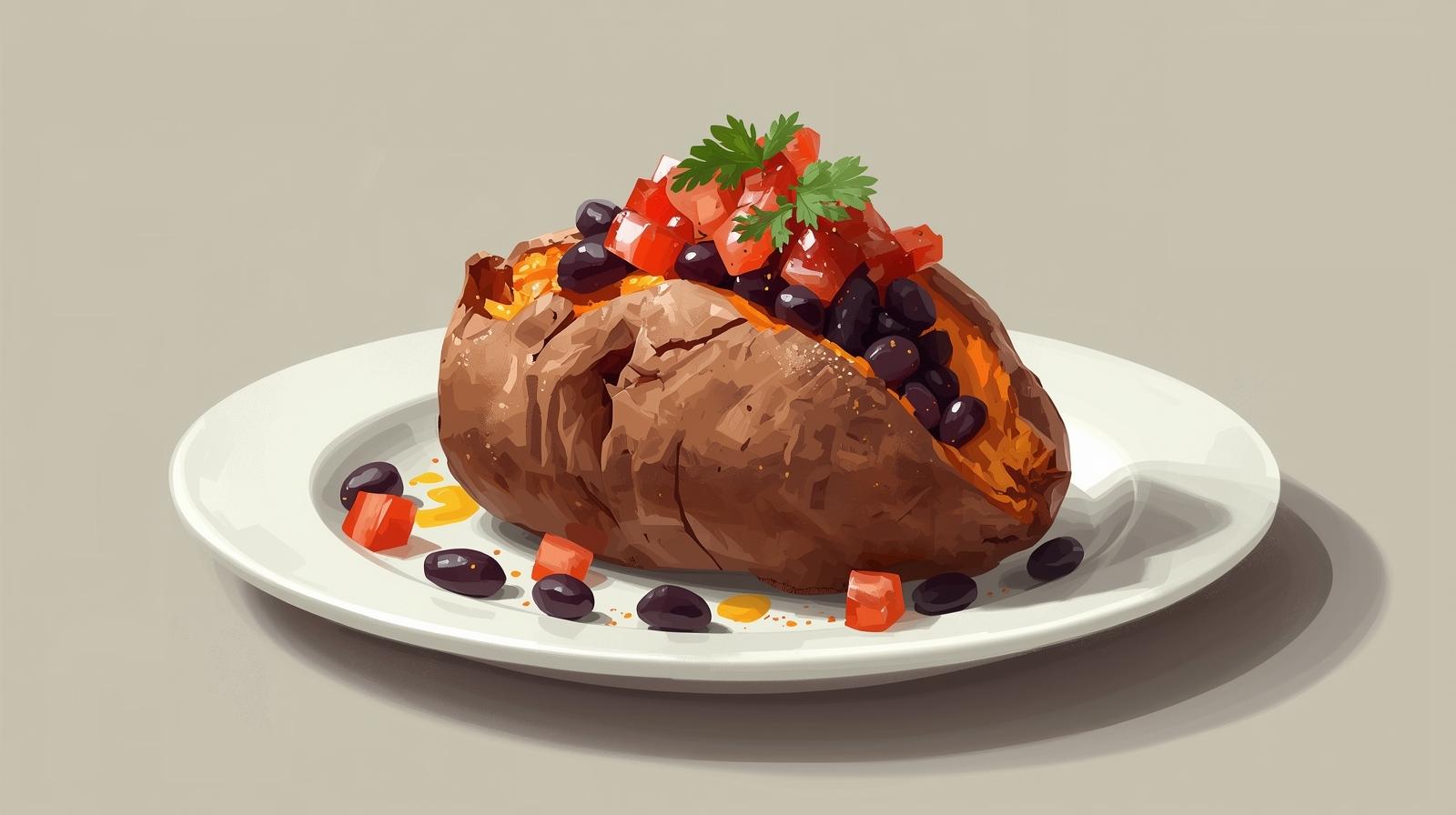
A baked sweet potato with black beans, salsa, and avocado is a complete meal. Toast with mashed avocado, tomato slices, and salt is breakfast. Oatmeal with banana and peanut butter fuels your morning just fine.
Simple is not inferior. Simple is sustainable. And sustainable is what actually changes your life.
Step 5: Learn from Each Meal
After you eat, take a mental note: Did this satisfy you? Did it need more flavor? Were you hungry an hour later? What would make it better next time?
This isn’t about judging yourself. It’s about building food literacy: learning how your body responds to different foods and combinations.
Over time, you’ll develop an intuitive sense of what you need. You’ll know when a meal needs more base (still hungry) or more fat (not satisfied) or more seasoning (tastes blah).
Why This Method Works When Everything Else Failed

Let me be honest with you about something: I didn’t invent this approach because I’m some genius. I figured it out because everything else had failed me.
I spent years chasing recipes, buying specialty ingredients, following meal plans, and feeling like I was constantly failing at something that seemed to come easily to everyone else.
The turning point came when I realized I was making eating well way harder than it needed to be. I was treating every meal like a performance instead of simply nourishing my body.
The Meal Blueprint Method works because it removes the barriers that keep most people stuck:
- It removes the complexity that makes you give up before you start.
- It removes the dependency on external instructions so you can trust yourself.
- It removes the rigidity that makes you feel like you’re failing when life doesn’t go perfectly.
- It removes the scarcity mindset and replaces it with abundance.
What it adds is simple: structure without restriction, guidance without rules, and a pathway to food freedom you might not have thought possible.
Common Questions About How to Build Plant-Based Meals
Q: Do I have to use all four components in every single meal?
Ideally, yes, because that’s what makes a meal satisfying and complete. But life happens.
Sometimes you’ll have a snack that’s just fruit and nut butter (produce + protein + fat). Sometimes lunch is leftovers that don’t perfectly fit the blueprint. That’s fine.
The goal is to build most of your main meals using all four components so you stay nourished and satisfied throughout your day.
Don’t stress about perfection. Aim for consistency.
Q: What if I hate cooking and don’t want to do anything complicated?
Perfect, this method is for you. Most blueprint meals require nothing more than heating, mixing, or assembling.
Canned beans warmed in a pan. Frozen vegetables microwaved. Grain reheated from a batch you made earlier. Avocado mashed with a fork. Lemon squeezed with your hands.
This isn’t cooking in the chef sense. This is feeding yourself efficiently with real food.
Q: How do I know I’m getting enough nutrients without tracking everything?
When you eat a variety of components throughout your day (different colored produce, different bases, different proteins), you’re getting what you need.
Your body is remarkably good at balancing nutrients when you feed it whole plant foods consistently.
The blueprint ensures you’re covering the basics: carbohydrates for energy, protein for building and repair, fat for absorption and satisfaction, and produce for micronutrients and fiber.
If you’re eating enough to feel satisfied (not stuffed, not hungry) and you’re including all four components regularly, you’re doing fine.
Q: Can my family eat this way too, or is this just for me?
The blueprint works beautifully for families because everyone can customize their own bowl.
Put out the components and let each person build what appeals to them.
Kids especially love this because they get control over their choices. Your partner might load up on certain vegetables while avoiding others. Everyone’s happy.
Start by making your own meals this way. When they see you eating without stress and actually enjoying it, curiosity happens naturally.
Q: What about when I’m really craving something specific that doesn’t fit the blueprint?
Eat it. Seriously.
This isn’t a rigid system with rules you have to follow perfectly. It’s a framework that makes nourishing yourself easier most of the time.
If you’re craving pizza, eat pizza. If you want cookies, eat cookies. The blueprint is there to simplify your everyday eating, not to create more food rules and restrictions.
What you’ll probably notice over time is that when you’re consistently nourished using the blueprint, those cravings shift. They become preferences instead of desperate urges.
And you can often satisfy them by tweaking the components. Craving pizza? Make a pasta bowl with marinara, vegetables, white beans, and nutritional yeast for that cheesy vibe.
But some days you’ll just want the actual pizza. That’s called being human.
📖 Good Reads: How Not to Die, The China Study and Plant-Based Nutrition
In Essence: Build Your Meals
Here’s what I want you to understand: eating more plant foods doesn’t require you to become a chef or collect hundreds of recipes you’ll never make again.
It requires understanding how to build plant-based meals using four simple components. Base + Produce + Protein + Flavor.
That’s the whole blueprint.
Start with one meal. Build it using the blueprint. Notice how much easier it feels when you’re making choices instead of following commands.
Then do it again tomorrow. And the next day.
Before long, you’ll realize you’re eating well consistently—not because you became a better cook or discovered willpower you didn’t have before.
But because you learned a framework that actually works with real life instead of against it.
You don’t need another recipe. You need the blueprint. And now, you have it.
⭐ Let’s chat: What component do you struggle with most—building the base, adding enough produce, including protein, or making it taste good? Let’s troubleshoot together in the comments.