This post may contain affiliate links. If you purchase through these links, I may earn a small commission at no extra cost to you. This helps keep Pine+Mango running. Thank you for your support! Read our full disclosure here.
You’ve heard it before. “Eat the rainbow.” Maybe it sounded like something your third-grade teacher said, or a tagline on a bag of candy.
Either way, it probably didn’t feel like a real strategy.
But guess what? It is.
Eating a variety of colorful plant foods is one of the most well-researched, straightforward ways to nourish your body across the board.
Each color in your produce isn’t just pretty. It’s a signal.
A marker for a specific group of plant compounds called phytonutrients, and your body needs a range of them to function at its best.
One color alone won’t do it. But a plate that looks like a garden? That’s your body getting what it actually needs.
This isn’t about rules. It’s about understanding why color matters — so adding more of it feels natural, not forced.
What Are Phytonutrients and Why Do They Matter?
Plants make pigments to survive. To attract pollinators, fight off disease, protect themselves from sun damage.
Those same pigments, when you eat them, get to work inside your body doing similar things: fighting inflammation, protecting your cells, supporting your immune system, and helping your organs do their jobs.
Scientists have identified thousands of phytonutrients so far. They’re not vitamins or minerals — they’re in a category of their own.
And research consistently shows that people who eat a wide variety of colorful plant foods have lower rates of chronic disease, better cognitive function, and stronger immune response.
One study found that greater dietary diversity — especially across plant food colors — was significantly associated with reduced markers of inflammation.
That’s the why. Now let’s talk color.
What Each Color Does for Your Body
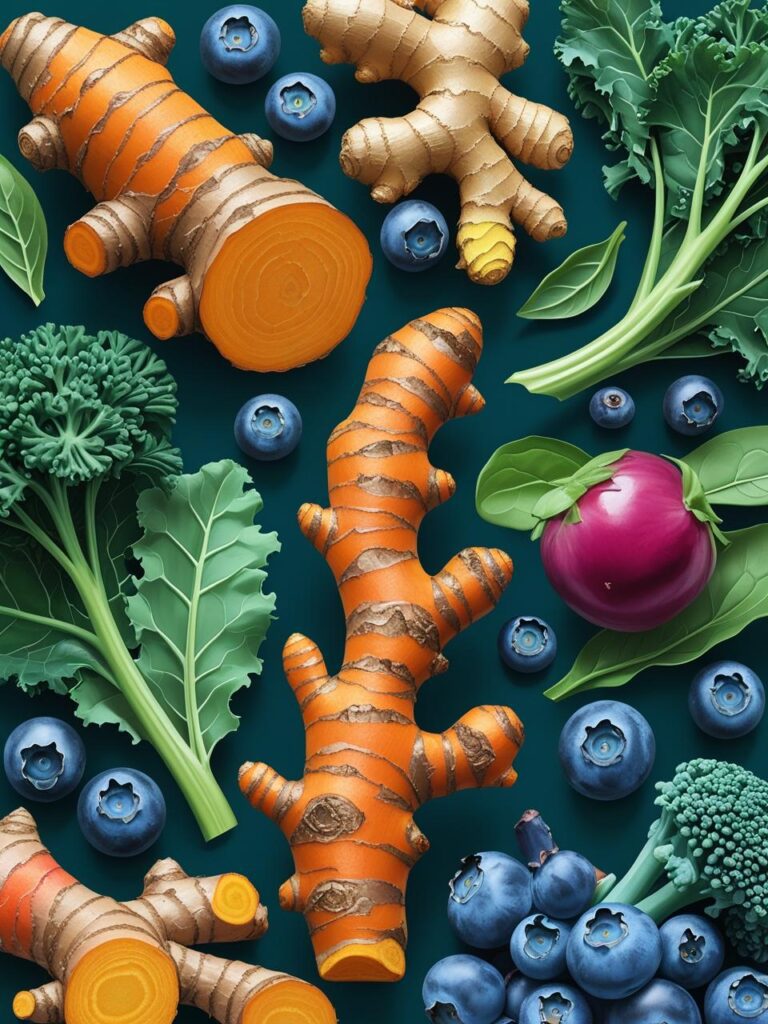
🔴 Red: Heart and Cell Protection
Red foods get their color from lycopene and anthocyanins — two phytonutrients with serious anti-inflammatory and antioxidant power.
Lycopene in particular has been studied extensively for its role in reducing the risk of cardiovascular disease and certain cancers.
Here’s what’s wild about lycopene specifically: unlike most nutrients, it actually becomes more available to your body the more a tomato is cooked and processed. That means tomato sauce, in some ways, beats a raw tomato.
Red foods also tend to be rich in vitamin C and potassium, which work alongside lycopene to support healthy blood pressure and reduce oxidative stress on your cells.
If you’re someone who deals with joint stiffness or low-grade inflammation, red foods are a good place to start paying attention. The anti-inflammatory effect isn’t instant, but it compounds.
Eat: tomatoes (especially cooked — heat increases lycopene absorption), watermelon, red bell peppers, strawberries, raspberries, cherries, beets
🟠 Orange + 🟡 Yellow: Immunity and Eye Health
These warm colors come primarily from beta-carotene and other carotenoids.
Your body converts beta-carotene to vitamin A, which supports immune function, skin health, and vision. These are the foods that quietly keep your defense systems running.
Beta-carotene is fat-soluble, which means it needs a little fat to actually get absorbed.
Roasting carrots in olive oil isn’t just for flavor — it’s a delivery system. Eat your sweet potato dry and you’re leaving nutrients on the table, no pun intended.
Orange and yellow foods are also high in vitamin C, especially citrus and mango, which supports collagen production and helps your body absorb iron from other plant foods.
That’s a small but mighty detail if you’re building meals around legumes and greens.
Eat: carrots, sweet potatoes, butternut squash, mango, papaya, yellow bell peppers, turmeric, pumpkin
🟢 Green: Detox, Energy, and Everything Else
Green is the heavy hitter. Chlorophyll, folate, vitamin K, iron, calcium, lutein — leafy greens and cruciferous vegetables are stacked.
Cruciferous vegetables like broccoli, kale, and Brussels sprouts contain sulforaphane, a compound studied for its ability to activate the body’s natural detox pathways and reduce cancer cell growth.
Green foods split into two camps, and it helps to know the difference.
Leafy greens (spinach, kale, arugula) are mineral powerhouses — iron, calcium, magnesium. Cruciferous vegetables (broccoli, cauliflower, Brussels sprouts) bring the sulfur compounds that support liver detoxification.
You want both camps represented, not just one.
There’s also a practical reason green deserves extra attention: most people are already eating some orange and red without trying — think ketchup, orange juice, apples.
Green is usually the color people are most deficient in. If you only improve one color this month, make it this one.
Eat: spinach, kale, arugula, broccoli, Brussels sprouts, zucchini, green peas, cucumber, avocado, asparagus
🔵 Blue + 🟣 Purple: Brain and Blood Vessel Health
Anthocyanins — the same compounds that show up in red foods — are even more concentrated in deep blue and purple plant foods. They cross the blood-brain barrier, meaning they directly support cognitive function and brain health.
Research found that higher blueberry and strawberry consumption was associated with slower cognitive decline in older adults.
What makes anthocyanins unique is their effect on blood vessel flexibility. Studies have linked regular intake to improved circulation and lower blood pressure, partly because these compounds help blood vessels relax and dilate properly.
That matters for your brain as much as your heart — better circulation means better oxygen and nutrient delivery upstairs.
Frozen blueberries count just as much as fresh, by the way.
The anthocyanin content holds up well through freezing, so there’s no need to wait for berry season to get the benefit.
Eat: blueberries, blackberries, purple cabbage, eggplant, figs, Concord grapes, purple sweet potato
⚪ White + 🟤 Brown: Immune Defense and Gut Health
Often overlooked, white and brown plant foods contain allicin (in garlic and onions), beta-glucans (in oats and mushrooms), and quercetin — compounds that support immune response, reduce inflammation, and feed beneficial gut bacteria.
Don’t skip these just because they’re not colorful.
Garlic and onions are part of a food family that produces allicin only when they’re chopped, crushed, or chewed — the compound doesn’t exist in the intact vegetable.
That’s worth knowing, because it means a little prep work (mincing garlic and letting it sit for a few minutes before cooking) actually maximizes the benefit.
Mushrooms deserve a special mention here too. Beyond beta-glucans, mushrooms are one of the only plant foods that can produce vitamin D when exposed to sunlight, even after they’ve been harvested.
Setting sliced mushrooms in a sunny window for 15 minutes before cooking can meaningfully boost their vitamin D content — a small trick most people never hear about.
Eat: garlic, onions, cauliflower, mushrooms, oats, parsnips, leeks, white beans
The Rainbow Is Already in Your Meal Blueprint
Here’s where this gets really practical.
If you’re already building meals with the Meal Blueprint Method — Base + Protein + Produce + Flavor/Fat — adding color variety is as simple as rotating what you put in the Produce slot.
Monday’s bowl has roasted sweet potato and spinach? That’s orange and green. Wednesday you swap in purple cabbage and tomatoes. Friday you throw in beets and cucumber.
You’re not changing the structure of how you eat. You’re just cycling through colors in the part of the meal designed for it.
That’s it. That’s the whole strategy. No new system, no complicated planning — just a different color in the same slot.
How to Actually Eat the Rainbow Without Overthinking It
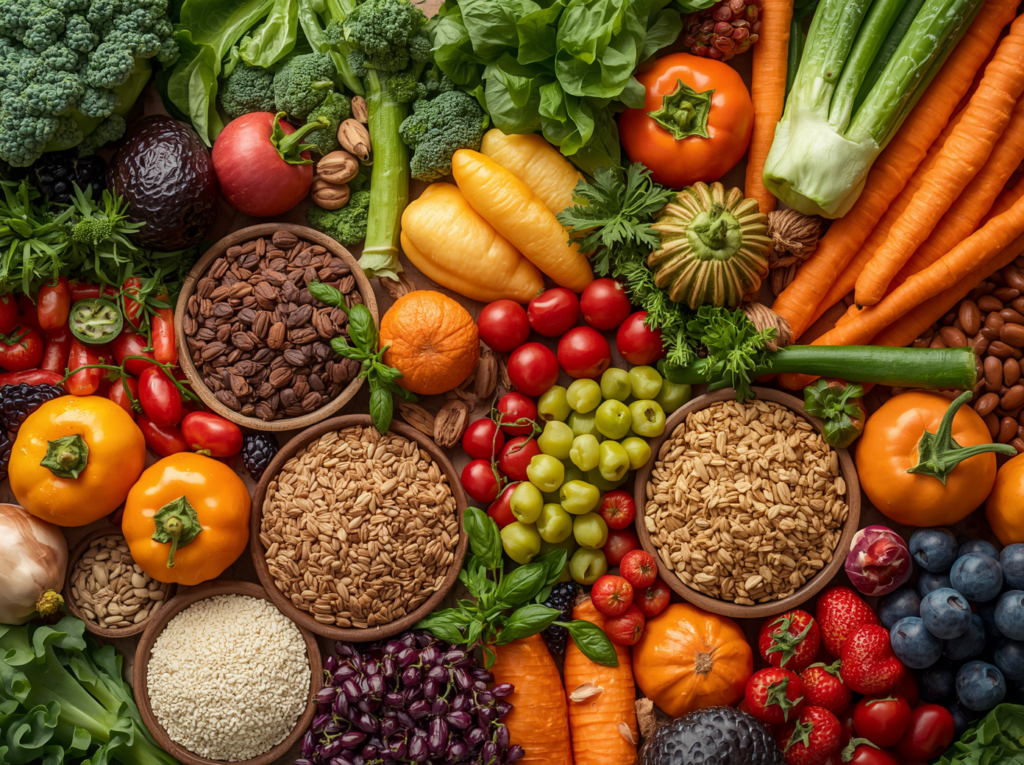
You don’t need to eat every color every single day.
Studies suggest that aiming for 30 different plant foods per week is a strong target for gut microbiome diversity — and that counts herbs, spices, and even different-colored varieties of the same vegetable.
A purple carrot and an orange carrot count separately.
Here’s how to make it work in real life:
- Shop by color, not by recipe. When you’re at the store, scan your cart. If it’s all one color, grab one more. Takes about 10 seconds.
- Rotate your greens. Spinach one week, arugula the next, kale after that. Different greens have different nutrient profiles, and your gut bacteria benefits from the variety.
- Use frozen produce freely. Frozen blueberries, mango, peas, and edamame are just as nutrient-dense as fresh and make adding color effortless.
- Let the Blueprint do the work. Build your base, add your protein, then choose two or three colors for your produce. Done.
- Add one new color per week. Not all at once. Just one. Roast a beet for the first time. Throw some purple cabbage into a stir-fry. Small additions compound quickly.
FAQs About Eating the Rainbow
Q: Do I have to eat every color every day?
No — and trying to do it perfectly every day will burn you out fast. The goal is variety over time, not perfection at every meal.
Research on the gut microbiome focuses on weekly plant diversity, not daily.
If you hit four or five colors across a day, that’s a win. The rest will come naturally as you keep going.
Q: Is it better to eat these foods raw or cooked?
It depends on the food. Cooking actually increases the bioavailability of lycopene in tomatoes and beta-carotene in carrots. On the other hand, some heat-sensitive vitamins like vitamin C are better preserved in raw foods.
The simplest answer: eat a mix of both, and don’t stress about it. Variety in preparation is just as valuable as variety in color.
Q: What if I don’t like most vegetables?
Start with the colors you already eat — even a little. Most people eat more colors than they realize.
Tomatoes on a sandwich. Banana in the morning. An apple as a snack. That’s red, yellow, and green right there.
Build from what’s already working. You don’t have to like kale to eat the rainbow.
📖 Good Reads: How Not to Die, The China Study and Plant-Based Nutrition
In Essence: Eat the Rainbow
Eating the rainbow isn’t a cute phrase.
It’s a simple framework for getting more out of every plant food you eat — and for making sure your body gets the full range of what it needs to heal, protect itself, and thrive.
Red, orange, yellow, green, blue, purple, white — each color is doing something specific. Together, they cover a lot of ground.
You don’t have to overhaul anything. Just rotate what’s already in your Produce slot.
Add one new color this week. Let your plate get a little more interesting.
Your body will notice — and so will you.
⭐ What color do you eat the least of — and what’s one food in that color you’d actually be willing to try? Drop it in the comments.