No products in the cart.
This post may contain affiliate links. If you purchase through these links, I may earn a small commission at no extra cost to you. This helps keep Pine+Mango running. Thank you for your support! Read our full disclosure here.
You made the shift toward eating more plants. You’re feeling good about that. But then a little voice pipes up: “Okay, but… is this actually balanced?”
That question. I know it well. And honestly, it’s one of the most common things people wrestle with when they start eating more plant foods.
You’re not alone in wondering if you’re doing it right nutritionally — and the fact that you’re asking means you actually care about feeding your body well, not just checking a box.
That’s a great sign.
Learning how to build a balanced plant-based meal doesn’t require a nutrition degree or a color-coded spreadsheet.
It requires understanding a few simple truths about how food works in your body.
That’s exactly what this guide is for. Let’s break it all down together.
Subscribe to Our Nourished Newsletter
Get free weekly guidance for your plant-based journey, straight to your inbox.
Table Of Contents
- What "Balanced" Actually Means on a Plant-Forward Plate
- How Much Protein Do You Actually Need on a Plant-Based Plate?
- Why Carbs Are Not Your Enemy (And Why Plants Are Full of the Right Ones)
- The Role of Healthy Fats in a Plant-Based Meal
- Micronutrients: The Hidden Layer Most People Forget
- Common Nutrition Mistakes Beginners Make on a Plant-Based Plate
- Putting It All Together: A Simple Day of Balanced Plant-Based Eating
- FAQs About Balanced Plant-Based Meals
- In Essence: You're Doing Great
- Subscribe to Our Nourished Newsletter
What “Balanced” Actually Means on a Plant-Forward Plate

First, let’s ditch the idea that a balanced meal means perfectly portioned, Instagrammable, and complicated.
Balance, in the real sense of the word, just means your body is getting what it needs to function well — energy, building materials, and the micronutrients that keep everything running behind the scenes.
A truly balanced meal includes three things: a source of complex carbohydrates, a source of plant protein, and a source of healthy fat. That’s your foundation.
From there, you layer in color and variety because that’s where the micronutrients — vitamins, minerals, and antioxidants — come in.
Think of it less like a recipe and more like a blueprint. When you understand the blueprint, every meal becomes flexible, intuitive, and easy. No measuring cups. No panic.
The Meal Blueprint Method
Here’s a simple way to visualize a balanced plant-based plate:
- Half your plate: Non-starchy vegetables and leafy greens (spinach, kale, broccoli, peppers, zucchini, cucumber, tomatoes)
- A quarter of your plate: Complex carbohydrates (brown rice, sweet potato, quinoa, oats, lentils, whole grain bread)
- A quarter of your plate: Plant protein (beans, lentils, tofu, tempeh, edamame, hemp seeds)
- A drizzle or small addition: Healthy fat (avocado, olive oil, nuts, seeds)
👉🏿 Learn more about the blueprint at How to Build Plant-Based Meals Without Recipes: The Meal Blueprint Method.
How Much Protein Do You Actually Need on a Plant-Based Plate?
This is the one everyone worries about. And fair enough — protein is important.
It builds and repairs tissue, supports your immune system, makes enzymes and hormones, and keeps you feeling full. But here’s where the worry often gets overblown.
The general recommendation for most adults is about 0.8 grams of protein per kilogram of body weight per day, though many nutrition researchers suggest that slightly higher — around 1.0 to 1.2 grams per kilogram — is a better target for active adults or those over 50.
For a 150-pound (68 kg) person, that’s roughly 55 to 82 grams of protein per day. Spread across three meals, that’s very achievable on a plant-forward plate.
Where Does Plant Protein Actually Come From?
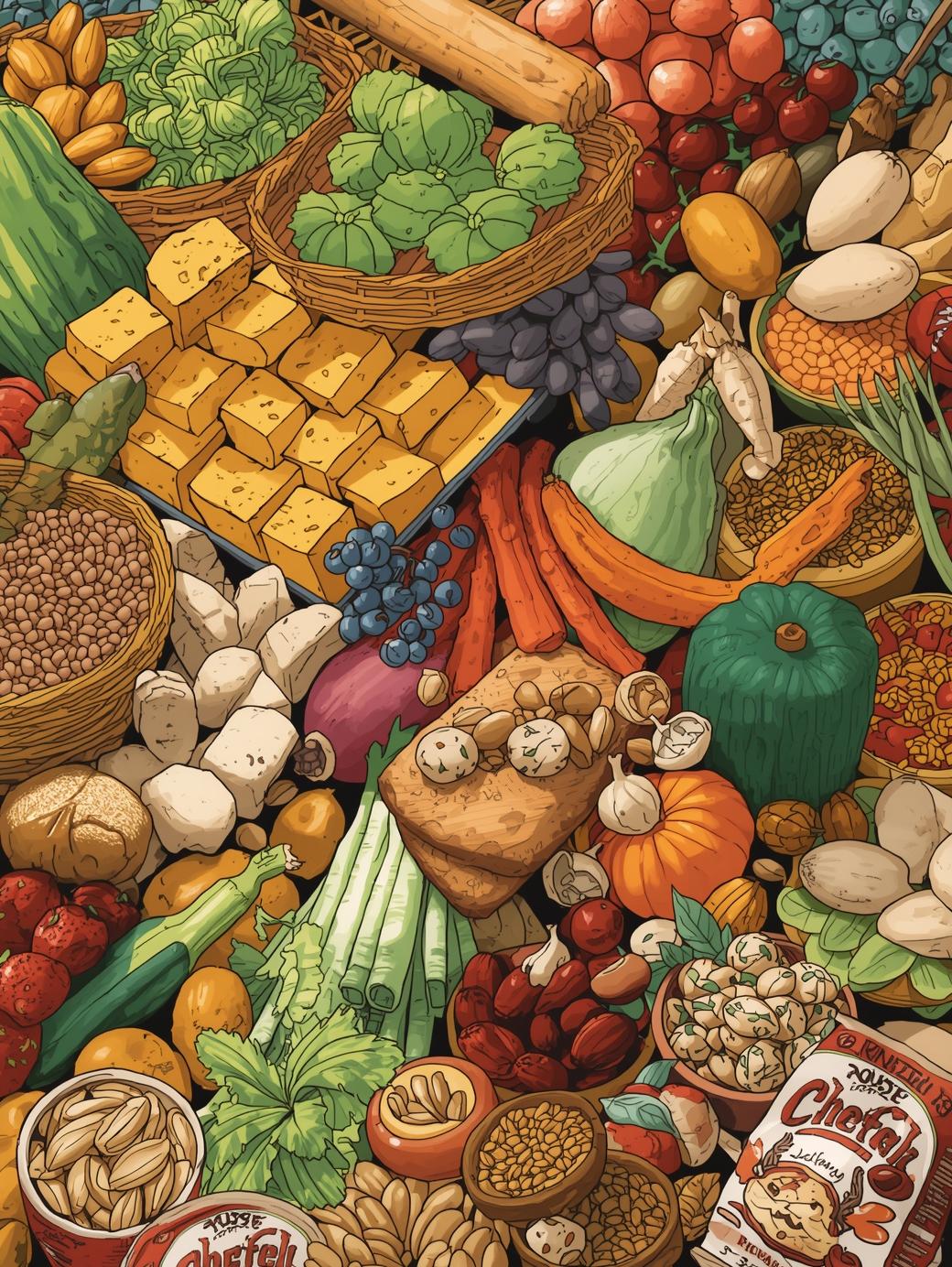
Here are some of the most reliable plant protein sources and roughly how much protein they deliver:
- Lentils: ~18g per cooked cup
- Black beans or chickpeas: ~15g per cooked cup
- Tofu (firm): ~20g per cup
- Tempeh: ~31g per cup — yes, really
- Edamame: ~17g per cup
- Hemp seeds: ~10g per 3 tablespoons
- Quinoa: ~8g per cooked cup
- Peanut butter: ~8g per 2 tablespoons
You don’t have to eat all of these every day. You just need to make sure at least one of them shows up at every meal.
One Myth Worth Busting Right Now
You may have heard that you need to “combine” plant proteins at each meal to get a complete amino acid profile.
This idea — that you have to eat rice with beans at the same sitting, for example — has been thoroughly debunked.
Your body is constantly pooling amino acids from all the foods you eat throughout the day. As long as you’re eating a variety of whole plant foods over the course of the day, your body will get what it needs.
No strategic food pairing required.
👉🏿 If you’re still concerned about protein, check out How to Get Enough Protein on a Plant-Based Diet (Beginner Guide).
Why Carbs Are Not Your Enemy (And Why Plants Are Full of the Right Ones)

Somewhere along the way, carbohydrates got a terrible reputation. Whole industries were built on that fear. And a lot of people came to plant-based eating still dragging that fear with them.
Let’s set the record straight: carbohydrates are your body’s primary fuel source.
Your brain runs almost exclusively on glucose, which comes from carbohydrates. Your muscles use glycogen — stored glucose — as their main energy reserve.
Carbs are not the problem. Refined carbs, eaten in excess and stripped of fiber, are a different story.
The carbs that show up naturally in plant foods? Whole grains, legumes, root vegetables, and fruit? Those are the good guys.
They come packaged with fiber, vitamins, minerals, and water. They digest more slowly, keep blood sugar stable, and actually feed the beneficial bacteria in your gut.
Complex vs. Simple Carbohydrates
Complex carbohydrates are the ones you want as your staples:
- Sweet potatoes and other root vegetables
- Brown rice, wild rice, oats
- Quinoa (also a great protein source)
- Lentils and beans (yes, they count here too)
- Whole grain bread or pasta in moderation
- Corn, squash, peas
Simple carbohydrates (think white bread, white rice, processed snacks) digest quickly and can spike blood sugar. They’re not inherently evil, but they’re not doing you many nutritional favors either.
Whole food plants are almost always the smarter swap.
A practical note: if you’re feeling tired or low-energy after a meal, it’s often because you’re either under-eating carbohydrates or relying too heavily on refined ones.
👉🏿 For a deep-dive on carbs, read Healthy Carbs: The Best Plant-Bast Carbohydrates for Energy.
The Role of Healthy Fats in a Plant-Based Meal
Fat is the nutrient that tends to get misunderstood next. For a while, “low-fat” was the gold standard. We know better now.
Dietary fat is essential.
It helps your body absorb fat-soluble vitamins (A, D, E, and K), supports brain function, cushions your organs, regulates hormones, and makes food taste satisfying so you don’t find yourself rummaging through the kitchen an hour after dinner.
Plant foods are naturally rich in unsaturated fats, which are the heart-healthy kind.
They’re also home to one of the most important nutritional distinctions you’ll want to understand: omega-3 fatty acids.
Plant Sources of Omega-3s
Omega-3 fatty acids are anti-inflammatory and support heart and brain health. Here’s where to find them in plants:
- Flaxseeds and flaxseed oil (highest plant source of ALA omega-3)
- Chia seeds
- Walnuts
- Hemp seeds
- Edamame
- Seaweed and algae (the only plant source of DHA and EPA, the same forms found in fish — this is actually where fish get their omega-3s from in the first place)
A small handful of walnuts, a tablespoon of ground flax in your smoothie, or a sprinkle of chia seeds in your oatmeal — that’s all it takes to start checking this box.
Everyday Healthy Fat Sources to Build With
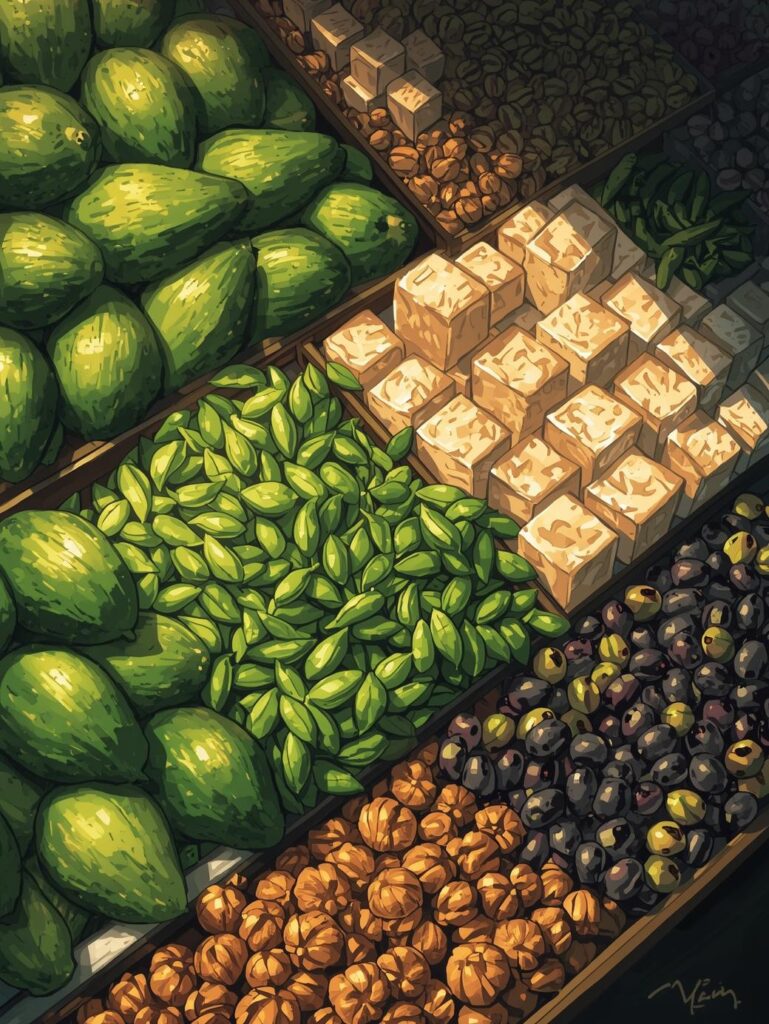
- Avocado or avocado oil
- Extra virgin olive oil
- Tahini (sesame seed paste)
- Almonds, cashews, Brazil nuts
- Pumpkin seeds and sunflower seeds
- Coconut (in moderation — it’s higher in saturated fat)
You don’t need a lot. A drizzle, a handful, a spoonful. Fat is calorically dense, which just means a small amount goes a long way toward satiety.
👉🏿 For more information on fat, read Plant-Based Healthy Fats: Why Your Body Needs Them.
Micronutrients: The Hidden Layer Most People Forget
Protein, carbs, and fat are your macronutrients. But there’s another layer that’s easy to overlook when you’re first building plant-forward meals: micronutrients.
These are the vitamins and minerals your body needs in smaller amounts, but that have an enormous impact on how you feel day to day — your energy, your mood, your skin, your sleep, your immunity.
Everything.
When people feel “off” on a plant-forward eating pattern, it’s usually not because of protein. More often, it’s because of a few specific nutrients that require a little extra attention.
The good news is that once you know what they are, they’re not hard to address.
Nutrients to Be Mindful Of
Iron
Plant foods do contain iron (non-heme iron), found in lentils, spinach, tofu, pumpkin seeds, and fortified grains.
Non-heme iron is absorbed less efficiently than the iron from animal sources, but you can significantly boost absorption by pairing iron-rich plant foods with vitamin C — think a squeeze of lemon on your lentil soup or bell peppers in your spinach stir-fry.
Cooking in a cast iron pan also subtly increases the iron content of your food, which is a small but real bonus.
Calcium
Dairy is not the only source, not even close.
Calcium is found in leafy greens like kale, bok choy, and collard greens, as well as tofu made with calcium sulfate, fortified plant milks, almonds, tahini, and white beans.
Eating a variety of these throughout the day adds up faster than most people expect.
Zinc
Found in legumes, seeds, nuts, and whole grains. One practical note: soaking and sprouting beans and grains before cooking can reduce phytates, which are naturally occurring compounds that can interfere with zinc absorption.
You don’t have to do this every time, but it’s a useful trick to know.
Magnesium
This one doesn’t get talked about enough.
Magnesium is involved in over 300 biochemical reactions in the body, including energy production, muscle and nerve function, and blood sugar regulation.
Fortunately, plant foods are some of the best sources: dark leafy greens, pumpkin seeds, black beans, brown rice, avocado, and dark chocolate (yes, really).
If you’re eating a colorful, whole food plant plate, you’re likely covering this one well.
Vitamin B12
This is the one nutrient you genuinely cannot get in reliable amounts from plant foods alone. B12 is produced by microorganisms in soil and is mainly found in animal products.
If you’re eating predominantly plant foods, supplementing with B12 is one of the most important things you can do.
It’s not a flaw in plant eating — it’s just a reality of modern life, where our produce is thoroughly washed and our soil isn’t what it used to be.
A simple, inexpensive B12 supplement covers this easily, and many fortified plant milks and nutritional yeasts also contain added B12.
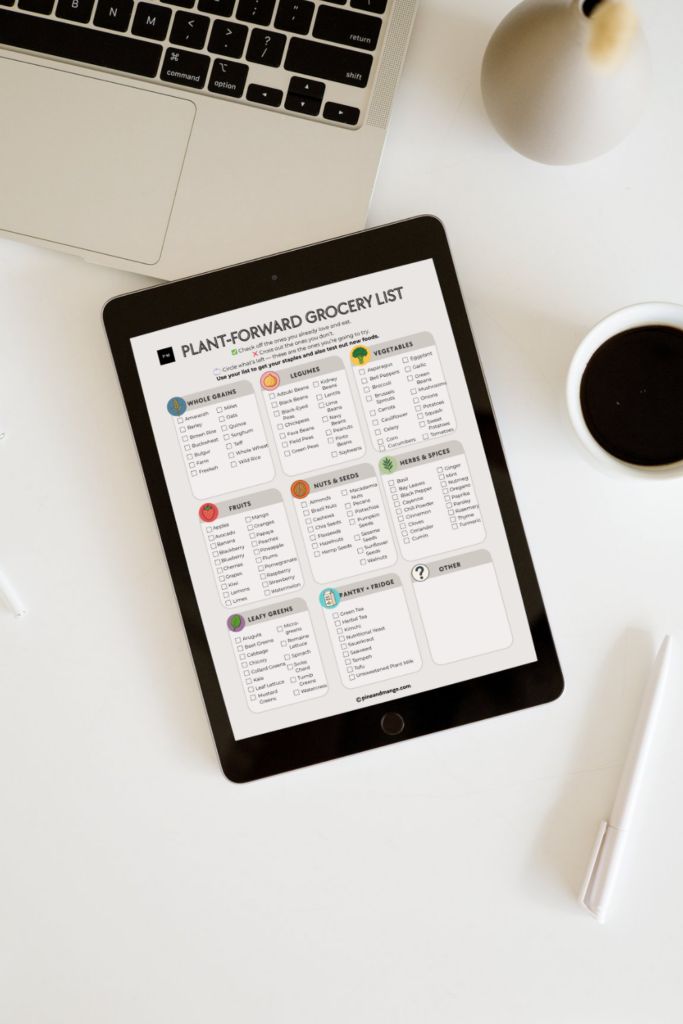
Get Your FREE Plant-Forward Grocery List Today!
Vitamin D
Less a “plant issue” and more a modern-life issue — most people, regardless of how they eat, are low in vitamin D. Sunlight is the best source.
Getting 15 to 30 minutes of midday sun on your skin a few times a week can make a significant difference.
A supplement is worth discussing with your doctor, especially if you live somewhere with limited sun exposure or spend most of your time indoors.
Iodine
If you’re not eating sea vegetables (like nori or dulse) or using iodized salt, this is worth keeping an eye on.
Your thyroid depends on iodine to produce hormones that regulate metabolism, energy, and body temperature.
Seaweed is a rich plant source, though intake should be moderate since too much can also be problematic.
A little nori wrap here, a sprinkle of dulse flakes there — easy ways to keep this in rotation.
Selenium
A trace mineral that supports thyroid function and acts as an antioxidant in the body.
Brazil nuts are one of the most concentrated food sources of selenium on the planet — just two or three Brazil nuts a day covers your needs.
That’s genuinely one of the easiest nutritional wins there is.
The good news in all of this: a varied, colorful, whole food plant-forward plate naturally covers most of your nutritional bases. Variety is genuinely your best tool here.
The more different plants you eat — different grains, different beans, different vegetables, different seeds — the wider your nutritional net becomes.
👉🏿 Learn more about essential nutrients at Micronutrients Explained: How Vitamins and Minerals Help Your Body Thrive.
Common Nutrition Mistakes Beginners Make on a Plant-Based Plate
Let’s be honest. Most people starting out make at least one or two of these mistakes. No judgment — I made some of them too.
And none of them mean you’re failing. They just mean you needed someone to point them out.
Mistake 1: Eating too little protein at each meal.
Not because plants don’t have protein, but because it’s easy to build a plate that’s mostly vegetables and grains and forget to add a substantial protein source.
A salad with cucumbers and tomatoes is beautiful, but it’s not going to keep you full or fuel your muscles.
Remember the blueprint: beans, lentils, tofu, tempeh, or hemp seeds at every meal. Make protein a non-negotiable anchor, not an afterthought.
Mistake 2: Cutting carbs out of fear.
Eating mostly salads and vegetables and wondering why you’re tired, foggy, and hungry two hours later. Whole food carbohydrates are necessary for sustained energy.
Your brain runs on glucose. Your muscles run on glycogen. Don’t skip the rice, the sweet potato, or the lentils because someone on the internet told you carbs are bad.
Whole food carbs are not the enemy — they’re the fuel.
Mistake 3: Forgetting fat.
Going too low in fat leads to poor vitamin absorption, persistent hunger, and cravings that feel impossible to manage.
Fat slows digestion, keeps blood sugar stable, and signals to your brain that you’ve eaten enough. A small amount of healthy fat at each meal — avocado, olive oil, nuts, seeds, tahini — is not optional.
It’s part of what makes your meal genuinely satisfying instead of just technically nutritious.
Mistake 4: Eating the same 5 foods on repeat.
Variety is how you cover your micronutrient bases. If your plant-forward eating looks like salad, oatmeal, and brown rice every single day, you may be missing important nutrients over time.
The diversity of your plate directly impacts the diversity of your gut microbiome, which influences everything from digestion to immunity to mood.
Try rotating your greens, grains, and protein sources week to week. Swap spinach for arugula. Try farro instead of rice. Add a new bean each month.
Small shifts make a big cumulative difference.
Mistake 5: Relying too heavily on processed plant foods.
Plant-based burgers, packaged snacks, and processed meat alternatives have their place — they can be a helpful bridge, especially early on. But they’re not the foundation.
Many of these products are highly processed, high in sodium, and stripped of the fiber and micronutrients that make whole plant foods so powerful.
Whole foods — the actual plants — are where the nutrition lives. Use the packaged stuff occasionally, not as your daily staple.
Mistake 6: Not eating enough, period.
This one is surprisingly common, especially for people coming from a restrictive eating mindset.
Plant foods are generally less calorically dense than animal foods, which means you may need to eat a larger volume of food to meet your energy needs. If you’re constantly tired, cold, or thinking about food, you may simply need to eat more.
More beans. More grains. Bigger portions of the good stuff. This is not a failure — it’s your body communicating clearly, and it deserves to be heard.
Mistake 7: Expecting perfection from day one.
This one isn’t nutritional, but it matters as much as any of the others. Progress over perfection.
An imperfect plant-forward meal beats a perfect intention every single time. The goal is not to eat flawlessly — it’s to eat better, more consistently, over a long period of time.
That’s what actually changes your health. Give yourself the grace to learn as you go.
Putting It All Together: A Simple Day of Balanced Plant-Based Eating
You don’t need a meal plan. But sometimes it helps to just see what this actually looks like in practice:
- Breakfast: Oatmeal made with fortified oat milk, topped with ground flaxseed, a handful of walnuts, and fresh berries. (Complex carbs + healthy fat + antioxidants + omega-3s)
- Lunch: Big grain bowl with brown rice, black beans, roasted sweet potato, avocado, shredded kale, and a tahini-lemon dressing. (All three macros + iron + calcium + healthy fat)
- Dinner: Stir-fry with firm tofu, broccoli, snap peas, bell peppers, and brown rice noodles, finished with sesame oil and a sprinkle of sesame seeds. (Complete plate, rich in protein, vitamins C and K, healthy fat)
- Snack: Apple slices with almond butter. (Simple carbs + protein + fat = satisfying and grounding)
That’s a full day of balanced, nourishing, plant-forward eating. Nothing special or hard to find. Nothing that takes more than 30 minutes to put together.
FAQs About Balanced Plant-Based Meals
Q: Do I need to track my macros to eat a balanced plant-based meal?
No — and honestly, for most people, obsessive tracking does more harm than good.
Learning the blueprint (protein + complex carb + healthy fat + lots of color) and then practicing it consistently will get you where you want to go.
Tracking can be a helpful tool occasionally, but it’s not a requirement for balance.
Q: How do I know if I’m getting enough protein from plants?
If you’re including a substantial protein source (like beans, lentils, tofu, or tempeh) at every meal and eating to satisfying fullness, you’re very likely meeting your needs.
Signs you might need more protein include persistent hunger shortly after meals, slow recovery from exercise, or difficulty maintaining muscle.
A brief check-in with a registered dietitian can give you personalized clarity if you’re concerned.
Q: Is it possible to build a balanced plant-based meal on a budget?
Absolutely, and this is one of the most underappreciated truths about plant-forward eating.
The most nutritious plant protein sources — dried lentils, dried beans, tofu, oats, brown rice, and frozen vegetables — are also among the least expensive foods at any grocery store.
Eating plant-forward on a budget is not only possible, it’s often cheaper than a meat-centered plate.
📖 Good Reads: How Not to Die, The China Study and Plant-Based Nutrition
In Essence: You’re Doing Great
Here’s what I want you to carry away from this: balance on a plant-forward plate is not about perfection. It’s not about hitting exact numbers or eating the “right” combination of foods at every sitting.
It’s about understanding the foundation — protein, complex carbohydrates, healthy fats, and a rainbow of color — and then applying that foundation with flexibility and consistency over time.
Once you understand how to build a balanced plant-based meal, something shifts. The doubt quiets down. You stop second-guessing every bite and start trusting your plate.
That trust, built on real knowledge and simple principles, is where food freedom actually lives.
You don’t have to get it perfect today. You just have to keep going.
⭐ Let’s chat: What part of building a balanced plant meal feels most confusing or overwhelming to you right now — protein, carbs, fats, or micronutrients? Drop it in the comments below. You’re probably not the only one wondering.