This post may contain affiliate links. If you purchase through these links, I may earn a small commission at no extra cost to you. This helps keep Pine+Mango running. Thank you for your support! Read our full disclosure here.
Ever notice how quiet it gets when you serve yourself something different? Or how one innocent comment about what’s on your plate can turn into a whole conversation you didn’t want to have?
Here’s the truth about being the only one eating plant-based in your family: it’s not just about figuring out what to cook.
It’s about navigating the awkward questions, the eye rolls, the “helpful” concern from people who think you’ve lost your mind.
It’s about staying consistent when someone’s always commenting on your food choices or trying to convince you that you need more protein.
And honestly? Some days the logistics feel easier than the emotional weight of being different.
But you don’t have to choose between your health and your peace. You don’t have to exhaust yourself cooking separate meals or defending your choices at every family gathering.
I’m going to walk you through both sides of this—the practical strategies that make solo plant-based eating actually sustainable, and the boundary-setting skills that protect your mental space and relationships.
Because I’ve been there. I was plant-based in my family alone, meal prepping solo while everyone else ate differently. And I’ve navigated every uncomfortable conversation, every bit of resistance, every moment of doubt.
Now things look completely different, and I’m going to show you exactly how that happened.

Subscribe to Our Nourished Newsletter
Get free weekly guidance for your plant-based journey, straight to your inbox.
- Part 1: The Practical Side — Making It Work When You're Flying Solo
- Why Cooking for One (in a House Full of Others) Feels So Hard
- Strategy #1: The Base Meal Method (Your New Best Friend)
- Strategy #2: Stock Your Zone and Prep Smart
- Strategy #3: Master Your 5 Go-To Meals
- Strategy #4: Keep Quick Backup Options Ready
- Grocery Shopping When You're the Only One
- Eating Out and Social Situations
- Staying Motivated When It's Just You
- Part 2: The Emotional Side — Handling Resistance, Criticism, and Sabotage
- Why People React Strongly to Your Food Choices
- The Most Common Types of Resistance (And How to Handle Each)
- Setting Boundaries Without Burning Bridges
- What to Do When Your Partner Isn't Supportive
- Dealing with Family Gatherings and Holidays
- What Not to Do (I Learned This the Hard Way)
- The One Strategy That Changes Everything
- When the Loneliness Feels Heavy
- What Success Actually Looks Like
- FAQs About Being Plant-Based in Your Family Alone
- In Essence: You're Already Braver Than You Think
- Subscribe to Our Nourished Newsletter
Part 1: The Practical Side — Making It Work When You’re Flying Solo

Why Cooking for One (in a House Full of Others) Feels So Hard
Let’s be real—being plant-based in your family alone creates logistical challenges that nobody warns you about.
You’re standing in the kitchen making dinner for everyone, and then you’ve got to figure out your own meal. The mental load alone is exhausting.
Add in the time, the separate ingredients, the extra dishes, and suddenly this thing that’s supposed to make you feel better starts feeling like a burden.
But here’s what changed everything for me: I stopped trying to make completely different meals. Instead, I learned to work smarter, not harder.
Strategy #1: The Base Meal Method (Your New Best Friend)
This is the game-changer when you’re the only plant-based eater in the house. You’re not cooking two meals. You’re making one meal with customizable components.
How it works: Build meals around a neutral base that everyone shares, then let people add their own proteins and toppings.
★ Real examples that work:
Taco Tuesday:
- Base: Warm tortillas, shredded lettuce, diced tomatoes, salsa, avocado, lime
- Their add-ons: Seasoned ground meat, cheese, sour cream
- Your add-ons: Seasoned black beans or lentils, extra veggies, maybe some cilantro-lime rice
Pasta Night:
- Base: Cooked pasta, marinara sauce loaded with vegetables (mushrooms, peppers, zucchini, spinach)
- Their add-ons: Meatballs, parmesan cheese
- Your add-ons: White beans or chickpeas, nutritional yeast, extra roasted vegetables
Breakfast Bowls:
- Base: Oats or grain of choice, toppings bar (berries, bananas, nuts, seeds, nut butter, maple syrup, cinnamon)
- Their add-ons: Whatever they want
- Your add-ons: Ground flax, hemp seeds, extra fruit
Stir-Fry Night:
- Base: Rice, tons of colorful vegetables, stir-fry sauce
- Their add-ons: Chicken or shrimp
- Your add-ons: Tofu, tempeh, or extra cashews and edamame
Burger Night:
- Base: Buns, all the fixings (lettuce, tomato, pickles, onions, condiments)
- Their burgers: Beef or turkey
- Your burger: Bean patty, portobello mushroom, or store-bought plant-based option
The beauty of this approach? Nobody feels like you’re making extra work. Everyone’s building from the same components, just personalizing their plates.
Strategy #2: Stock Your Zone and Prep Smart
When you’re eating plant-based alone, you need your own system. Not to be difficult, but to make your life easier.
Create Your Space:
Claim a shelf in the pantry and a section of the fridge. Keep it stocked with your essentials:
Pantry staples:
- Beans (canned for convenience, dried for budget)
- Lentils (red cook fast, green/brown are heartier)
- Rice, quinoa, oats
- Pasta
- Canned tomatoes
- Vegetable broth
- Nuts and seeds
- Nut butters
Fridge/freezer basics:
- Frozen vegetables (lifesaver on busy nights)
- Fresh fruit
- Leafy greens
- Hummus
- Plant milk
- Tofu or tempeh if you use it
The Sunday Power Prep:
One hour on Sunday (or whatever day) saves you all week when you’re the only one eating this way.
Here’s my routine:
- Cook a big batch of grains (rice, quinoa, farro—rotate each week)
- Roast 2-3 sheet pans of vegetables (whatever’s on sale or in season)
- Cook a pot of beans or lentils
- Wash and prep fresh vegetables and fruit
- Make a simple dressing or sauce
Now you have components ready to go.
Your family is having chicken and mashed potatoes? Great. You’ll pull out your roasted vegetables, scoop some quinoa, add beans, drizzle with tahini dressing. Five minutes.
Strategy #3: Master Your 5 Go-To Meals
You don’t need 50 recipes as a solo plant-based eater.
You need five meals you can make without thinking, that satisfy you completely, and that don’t require a trip to three different stores.
★ My five (adapt to your taste):
- The Big Bowl: Grain + roasted or raw vegetables + beans + sauce (tahini, peanut, or simple olive oil and lemon)
- Loaded Baked Potato/Sweet Potato: Bake it, split it, stuff it with everything (beans, steamed broccoli, salsa, avocado, nutritional yeast)
- The Hearty Salad: Mixed greens + substantial toppings (chickpeas, nuts, seeds, fruit, avocado, roasted vegetables) + good dressing. Make it big enough to be a meal, not a side.
- Simple Stir-Fry: Whatever vegetables you have + sauce (soy sauce, ginger, garlic, splash of rice vinegar) over rice. Add cashews or peanuts for substance.
- One-Pot Soup/Chili: Throw it all in—beans, vegetables, tomatoes, broth, seasonings. Make a big batch, eat it all week.
These rotate endlessly with different vegetables, seasonings, and small tweaks. You’ll never feel stuck.
Strategy #4: Keep Quick Backup Options Ready
Some nights you just don’t have it in you. You need emergency options that don’t involve cooking from scratch.
Keep these on hand:
- Canned soup (check labels, many are accidentally plant-based)
- Hummus and vegetables with pita or crackers
- Peanut butter and banana sandwich
- Frozen veggie burgers
- Pre-made salad with beans thrown in
- Overnight oats (prep in 2 minutes the night before)
It’s not about perfection. It’s about having something that works when you’re tired and everyone else is eating pizza.
Grocery Shopping When You’re the Only One
Shopping for two different eating styles feels overwhelming at first, but it gets easier.
My approach:
- Shop the basics everyone eats (produce, grains, pantry staples)
- Get their proteins
- Get your proteins (beans, lentils, tofu)
- Don’t overthink it
You’ll notice that once you stock your staples, weekly shopping gets simpler. You’re mostly replenishing fresh produce and whatever ran out. The beans and grains last forever.
★ Budget tip: Beans, lentils, rice, oats, and seasonal produce are some of the cheapest foods in the store. Even if you’re adding to the grocery bill with your separate items, plant foods are generally less expensive than meat. It often balances out.
Eating Out and Social Situations
This is where being plant-based in your family alone gets tricky, but it’s totally doable.
At Restaurants:
- Check the menu online beforehand if possible
- Most places can modify dishes—ask for vegetables instead of meat, or build a meal from sides
- Italian: Pasta with marinara, veggie pizza without cheese
- Mexican: Bean burritos/tacos, rice and beans, veggie fajitas
- Asian: Vegetable stir-fries, tofu dishes, veggie sushi
- American/Diners: Salads, veggie burgers, baked potatoes, sides of vegetables
Don’t make it a big production. Just order what you want without apologizing or explaining.
At Family Gatherings:
Offer to bring a dish—something hearty you can fill up on, but that others might enjoy too. A big colorful salad, roasted vegetable platter, hearty bean dish, fruit platter.
You’re contributing AND making sure you have something substantial to eat.
At Friends’ Houses:
Eat a little something before if you’re not sure what will be available. Then you can still enjoy what’s there that works for you without being starving.
It’s not rude to plan ahead, it’s practical.
Staying Motivated When It’s Just You
Some days, solo plant-based eating feels lonely. Everyone’s eating the same thing, bonding over shared food, and you’re… different.
What helps:
- Find your “why” and keep it close. Write it down. For me, it was finally having energy again, not feeling bloated and miserable after meals, and actually enjoying food instead of fighting with it. On hard days, I’d remember how awful I felt before, and that was enough.
- Track how you feel, not just what you eat. Notice your energy, your digestion, your mood, your skin. The results keep you going when the isolation feels heavy.
- Connect with others online. You might be alone in your house, but you’re not alone in this journey. Find communities (like us!), follow people who inspire you, read stories of others who’ve done this. It helps.
- Celebrate small wins. You meal prepped this week? Win. You didn’t cave when everyone was eating something you used to love? Win. You’re showing up for yourself even when nobody else gets it? Big win.
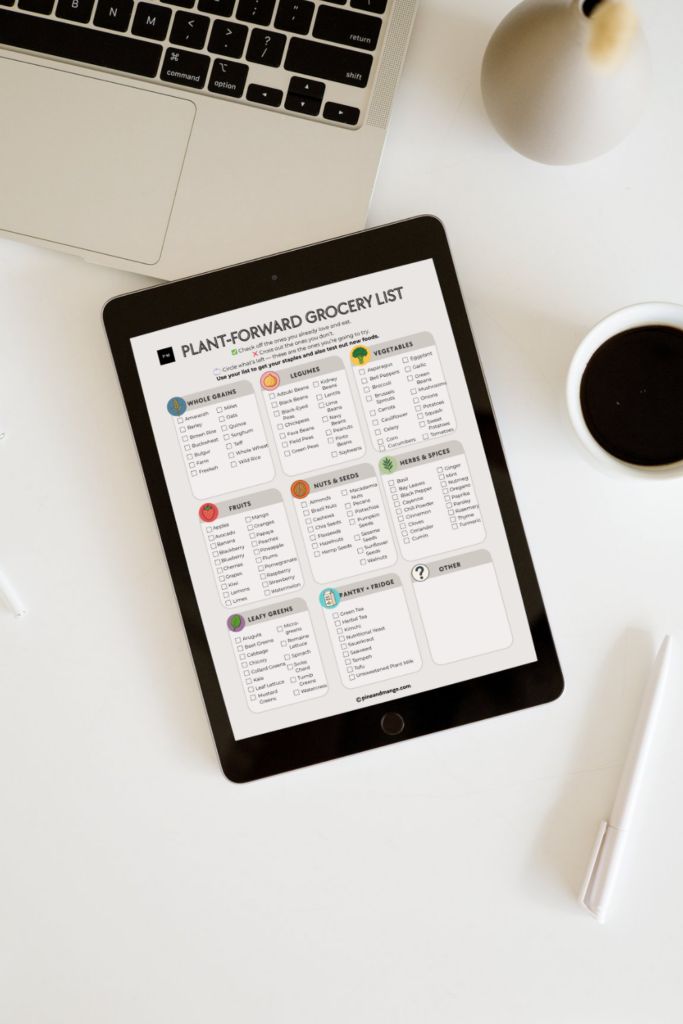
Get Your FREE Plant-Forward Grocery List Today!
Part 2: The Emotional Side — Handling Resistance, Criticism, and Sabotage

Why People React Strongly to Your Food Choices
Let’s talk about the elephant in the room: being the only plant-based person in your household doesn’t just create practical challenges. It creates emotional ones.
Your partner makes comments. Your mom expresses “concern.” Friends ask invasive questions. The kids complain. And you’re left feeling like you’re doing something wrong when you’re just trying to feel better.
Here’s what’s actually happening—and it has nothing to do with you:
- Food is identity. When you change how you eat, people perceive it (often unconsciously) as a rejection of them, their traditions, their love language, their choices. Even though you’re not judging anyone, they feel judged.
- Your change highlights their discomfort. If they’ve been thinking about eating healthier but haven’t, your choices might make them feel guilty or defensive. That’s not your fault, but it explains the reactions.
- People fear losing connection. Shared meals create bonding. When you eat differently, they worry (often without realizing it) that you’re pulling away from the family or friend group.
Research confirms this: people who eat differently from their social group often face pressure to conform—not because others are trying to be difficult, but because humans are wired to feel uncomfortable with difference in their immediate circle.
Understanding this doesn’t excuse poor behavior, but it helps you not take it personally. Their reactions are about them, not you.
The Most Common Types of Resistance (And How to Handle Each)
1. The “Concerned” Comments
“Are you getting enough protein?”
“You’re going to waste away!”
“Is this even healthy?”
These usually come from a place of genuine worry (mixed with misinformation). The person thinks they’re helping.
★ How to respond: Keep it short and confident. “I’m feeling great, actually. My energy is better than it’s been in years.” Or, “I’m eating plenty of protein—beans, lentils, nuts. My body’s doing well.”
Don’t launch into a nutritional lecture. Don’t get defensive. Just briefly reassure them and move on. If they push, you can say, “I appreciate you caring about me, but I’ve got this figured out.”
2. The Jokes and Eye Rolls
“Oh, here comes the rabbit food.”
“Guess we can’t go anywhere fun to eat now.”
Eye rolls every time you mention what you’re eating.
This is usually discomfort disguised as humor. They’re feeling awkward about the difference, so they make light of it.
★ How to respond: Don’t laugh along if it bothers you. A calm, direct response works: “I know you’re joking, but those comments actually don’t feel great. I’m just eating what works for me.”
Or sometimes, just let it roll off. Pick your battles. If it’s a one-off joke from someone who’s generally supportive, maybe it’s not worth addressing. If it’s constant and wearing you down, speak up.
3. The Pushers
“Just try a bite, it won’t kill you.”
“One piece won’t hurt.”
“You’re being too extreme.”
These people are actively trying to get you to eat what they’re eating. Sometimes it’s about control, sometimes it’s about their own discomfort with your difference.
★ How to respond: Hold your boundary firmly but kindly. “No thank you, I’m good with what I have.” Repeat as needed. You don’t owe anyone an explanation for what you put in your body.
If they keep pushing: “I’ve said no. Please respect that.” Then change the subject or walk away if you need to.
4. The Saboteurs
These are the people who actively undermine your choices—buying foods they know you’re not eating and leaving them around, making pointed comments in front of others, or “forgetting” your needs at gatherings.
This is harder because it often comes from someone close to you, and it can feel like betrayal.
★ How to respond: You need a direct conversation, not just in-the-moment responses. Find a calm time and say something like:
“I’ve noticed that when I choose not to eat certain things, you seem bothered by it. That’s making this harder for me. I’m not asking you to change how you eat, but I do need you to respect my choices. Can we figure this out together?”
If they’re defensive or dismissive, you might need to create more distance or stop relying on them for support in this area. Not everyone in your life needs to understand your choices, but they do need to respect them.
Setting Boundaries Without Burning Bridges
This is the skill that saves your sanity when you’re eating plant-based alone.
What boundaries sound like:
- “I appreciate your concern, but I’m not open to debating my food choices.”
- “I’m happy to share information if you’re genuinely curious, but I’m not interested in defending myself.”
- “I need you to stop commenting on what I’m eating. It’s not helpful.”
- “This is working for me. I’m not asking you to do it, just asking you to respect it.”
How to enforce them:
Say it once clearly. If they cross the boundary again, remind them: “I asked you not to comment on my food. I mean it.” If they keep going, leave the conversation or the room if you can. Boundaries without consequences aren’t really boundaries.
The guilt will come. You’ll feel like you’re being difficult or causing problems. You’re not. You’re teaching people how to treat you. The discomfort is temporary; the peace you gain is worth it.
What to Do When Your Partner Isn’t Supportive
This is the toughest one. When the person you share your life with doesn’t support your choices—or worse, actively undermines them—everything becomes exponentially harder.
If they’re skeptical but not hostile:
Give it time. Keep doing your thing without pushing them. Let your results speak.
My partner went from skeptical to curious to occasionally joining me, all because I focused on myself and didn’t nag or preach.
If they’re actively resistant:
You need to talk. Explain that this matters to you, that it’s helping you feel better, and that you need their support—or at least their neutrality. Ask what their real concern is.
Often it’s something you can address (fear you’ll expect them to change, worry about extra work, discomfort with difference).
If they’re sabotaging:
This is a bigger issue than food. It’s about respect. You might need couple’s counseling to work through why they can’t support you taking care of yourself.
That’s not dramatic—it’s recognizing that your partnership has a problem that extends beyond the dinner table.
Dealing with Family Gatherings and Holidays

Holidays are peak stress time when you’re the only one eating this way. All the family dynamics, food traditions, and expectations collide.
Strategies that work:
- Before the gathering: Let the host know you’re eating more plant foods now, and offer to bring a dish or two. Frame it as wanting to contribute, not as being difficult.
- At the gathering: Fill your plate with what works for you and don’t draw attention to what you’re not eating. If someone comments, keep it light: “I’m enjoying the salad and potatoes—everything’s delicious!”
- If someone pushes food on you: “Thank you, but I’m full. This was lovely.” Repeat as needed.
- After, if you’re drained: Give yourself permission to skip some gatherings or leave early. Your mental health matters more than obligatory attendance.
What Not to Do (I Learned This the Hard Way)
When you’re navigating plant-based eating solo in your household, certain approaches backfire spectacularly.
- Don’t preach. Even if you’re excited about how good you feel, resist the urge to tell everyone they should do this too. It creates defensiveness and resentment.
- Don’t share unsolicited health information. Leaving documentaries playing, forwarding articles, commenting on what others are eating—all of this creates tension and makes people less likely to be curious.
- Don’t make yourself a martyr. “I’ll just eat before I come” said with a sigh, or “Don’t worry about me, I’ll figure something out” in a sad tone—this makes people feel guilty and annoyed.
- Don’t criticize their food. No comments about how unhealthy something is, how you used to eat that, or anything that implies judgment. Your choices are about you, not them.
- Don’t expect them to cater to you. If you’re going somewhere, take responsibility for having something to eat. Don’t put the burden on others to figure out your food.
The One Strategy That Changes Everything
Here’s what worked for me when I was plant-based in my family alone:
Don’t talk about it. Be about it.
I stopped talking about it and let my results speak. No announcements or explanations unless directly asked. No sharing information unprompted or comments about anyone else’s food.
I just quietly started feeling better. More energy. Better mood. Clearer skin. Easier digestion. Genuine happiness around food instead of stress and guilt.
And people noticed.
They asked questions. “What are you doing differently?” “Why do you seem so much more energetic?” “How’d you stop the afternoon crashes?”
That’s when conversations happened. Not because I pushed, but because they pulled. And those conversations? They actually went somewhere, because people were genuinely curious instead of defensive.
My partner started asking for bigger portions of the roasted vegetables I was making. My son started grabbing fruit for snacks more often.
We began having more plant-forward meals as a family—not because anyone was forced, but because my experience created natural curiosity.
It took months. But it happened without a single argument, without burning a single bridge, and without me compromising on what my body needed.
When the Loneliness Feels Heavy
Some days, being the only plant-based person around just feels isolating. You’re at a family dinner and everyone’s bonding over the same food while you’re eating something different.
You’re tired of explaining. Tired of being the different one.
That loneliness is real, and it’s okay to feel it.
What helps:
- Find your people online. Join communities of others eating this way. Share your wins and struggles. You’re not alone in this journey, even if you’re alone in your house.
- Remember why you started. On hard days, recall how you felt before. The exhaustion, the digestive issues, the constant food stress. That reminder can carry you through.
- Celebrate yourself. You’re choosing yourself even when it’s uncomfortable. That’s powerful. That’s growth. That deserves recognition.
- Give it time. The isolation usually eases as you get more comfortable with your choices and as people adjust to the “new normal” of you eating differently.
What Success Actually Looks Like
Success when you’re plant-based in your family alone doesn’t mean converting your whole family or never facing resistance.
Success looks like:
- Eating in a way that feels good to your body without constant conflict
- Having strategies that make meals sustainable instead of exhausting
- Setting boundaries that protect your peace
- Staying consistent even when it’s uncomfortable
- Building confidence in your choices regardless of others’ opinions
You aren’t trying to make everyone understand. You’re not trying to prove anything. You’re just taking care of yourself in a way that works, while maintaining relationships with people you love who eat differently.
That’s not easy. But it’s absolutely possible.
FAQs About Being Plant-Based in Your Family Alone
Q: How do I handle constant criticism from family members about my plant-based choices?
Set clear boundaries early. The first time someone criticizes your choices, respond calmly but directly: “I appreciate your concern, but I’m not open to debating my food choices. This is working for me.”
If they continue, enforce consequences—leave the conversation, change the subject, or limit your time with them if needed. Most criticism comes from discomfort or misinformation, not actual concern.
You don’t owe anyone a defense of how you choose to nourish your body. If someone genuinely wants to understand, they’ll ask curious questions, not make critical comments.
Q: Should I cook completely separate meals as the only plant-based eater?
No—that’s a fast track to burnout. Instead, use the base meal method: make one meal with customizable components.
For example, make tacos where everyone uses the same base (tortillas, toppings) but adds their own protein. Or make pasta with veggie-loaded sauce where they add meat and you add beans.
You’re building from the same ingredients, just personalizing plates. This saves time, reduces stress, and doesn’t make you feel like you’re creating extra work.
Save fully separate meals for when you’re making something they truly won’t eat—and even then, keep your version simple.
Q: What if my partner or spouse actively sabotages my plant-based choices?
This is bigger than food—it’s about respect. Have a direct conversation when you’re both calm:
“When you [specific behavior], it makes eating this way much harder for me. I’m not asking you to change how you eat, but I need you to respect my choices. Why is this bothering you?”
Listen to their actual concern—often it’s fear you’ll push them to change, worry about extra work, or discomfort with difference. Address those specific fears. If they continue sabotaging after you’ve had this conversation, you might need couples counseling.
A partner who can’t support you taking care of your health is revealing a relationship issue that extends far beyond the dinner table.
📖 Good Reads: How Not to Die, The China Study and Plant-Based Nutrition

In Essence: You’re Already Braver Than You Think
Look, you’re choosing yourself even when nobody else in your circle is doing this. Even when it’s awkward, inconvenient, and lonely sometimes. That takes real courage.
Being plant-based in your family alone means navigating both the practical challenges—the meal prep, the separate cooking, the grocery shopping—and the emotional ones—the criticism, the isolation, the constant explaining.
But here’s what I know after living this: it gets easier. The logistics become routine. The boundaries you set start to hold.
And often, though not always, the people around you adjust. They see that you’re thriving, not suffering. They see that you’re still you, just healthier and happier. And sometimes, that opens doors you never expected.
You don’t need everyone’s approval or understanding. You just need practical strategies that work and boundaries that protect your peace. Now, you have both.
Keep showing up for yourself. Keep building meals that nourish you. Continue setting boundaries that honor you.
And know that the isolation you feel right now? It shifts as you get more comfortable in your choices and as your results speak louder than anyone’s doubts.
This isn’t about perfection or converting anyone. It’s about taking care of yourself while maintaining relationships with people you love who eat differently. You can absolutely do both.
⭐ What’s been your biggest challenge being plant-based in your family alone, and what’s one thing that’s actually helped you navigate it? Share in the comments—your experience might be exactly what someone else needs to hear today.