
This post may contain affiliate links. If you purchase through these links, I may earn a small commission at no extra cost to you. This helps keep Pine+Mango running. Thank you for your support! Read our full disclosure here.
You finally figured out how to eat well at home. Lots of plants, simple meals, a rhythm that feels good. Then a trip comes up and suddenly it all feels like it’s going out the window.
Sound familiar?
Travel is one of the biggest things people worry about when they start eating more plants. And honestly? That worry makes total sense.
You’re out of your kitchen, out of your routine, and surrounded by fast food and mystery menus. But here’s what I’ve learned: eating plant-forward on the road is way more doable than it looks.
It just takes a little prep and a shift in how you think about food when you’re away from home.
Subscribe to Our Nourished Newsletter
Get free weekly guidance for your plant-based journey, straight to your inbox.
- Why Travel Feels So Hard for Plant-Forward Eaters
- The Mindset Shift That Changes Everything
- Pack Before You Leave: Your Plant-Forward Travel Snack Kit
- Eating Well at Airports and on the Road
- Navigating Restaurant Menus Like a Pro
- Staying Nourished at Hotels
- FAQs About Plant-Based Traveling
- In Essence: Prepare But Be Flexible
- Subscribe to Our Nourished Newsletter
Why Travel Feels So Hard for Plant-Forward Eaters
Let’s be real for a second. Most travel food is built around convenience, not nourishment.
Airports are full of chips, candy bars, and sad sandwiches. Road trips mean gas station stops. Hotel breakfast? Usually eggs, bacon, and a waffle machine.
The struggle is real. But the problem isn’t that plant foods don’t exist out there in the world. It’s that we haven’t been taught how to find them or build a meal out of what’s available.
That’s the gap we’re going to close right now.
The Mindset Shift That Changes Everything
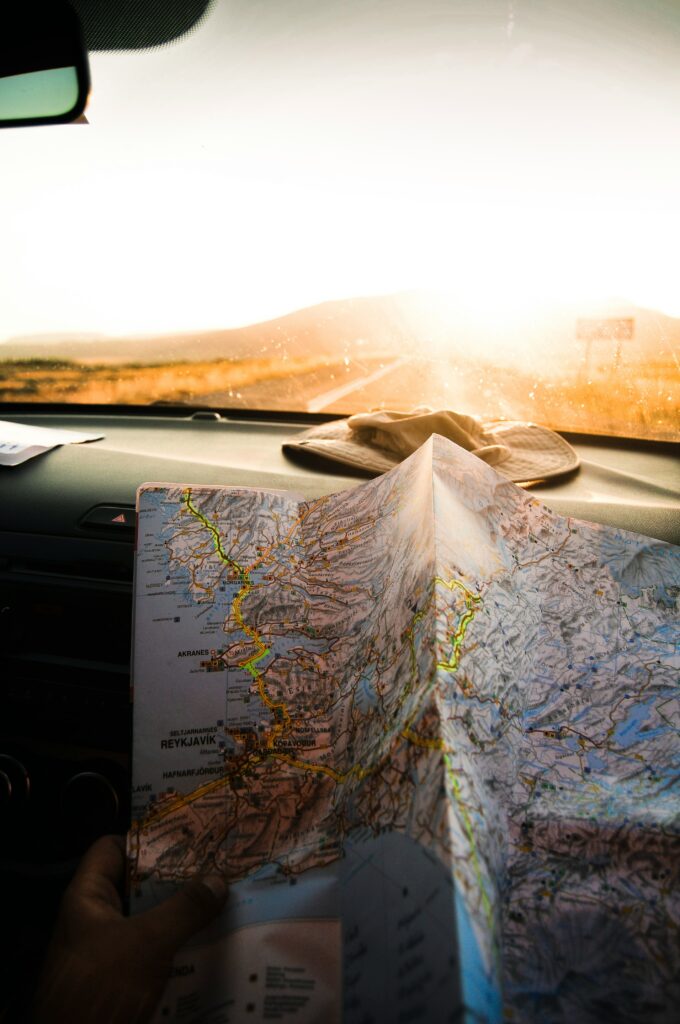
Before we get into the practical stuff, there’s one thing worth saying out loud: you don’t need a perfect plant-based meal to stay nourished.
You need enough of the good stuff to keep your body feeling solid.
Think progress, not perfection. One airport smoothie with spinach and banana counts. A side salad with your meal counts. A handful of almonds and a piece of fruit from a gas station counts.
Small additions of plant foods matter, even when you can’t control the whole plate.
This is actually the foundation of the Meal Blueprint Method: Base + Protein + Produce + Flavor/Fat. When you’re traveling, you’re not always going to get all four in one tidy meal.
But even hitting two or three of those pillars means your body is getting something real to work with.
Pack Before You Leave: Your Plant-Forward Travel Snack Kit
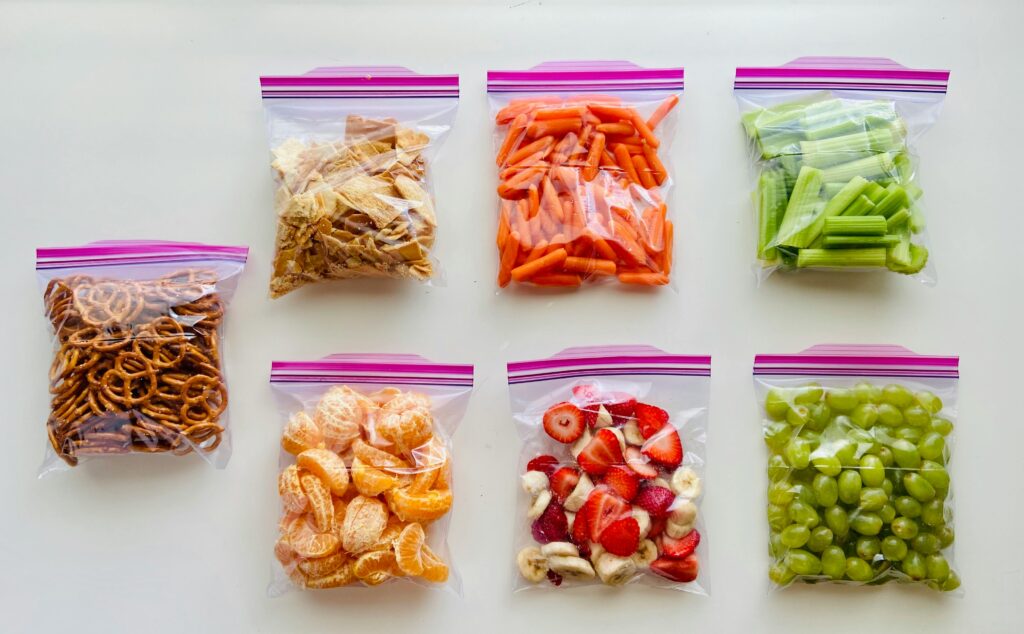
This is the single biggest game-changer. When you show up to the airport or climb into a car with your own food, you’re not at the mercy of whatever’s available. You’re already fed.
Here’s what I always pack:
- Nuts and seeds (almonds, cashews, pumpkin seeds) — dense, satisfying, no refrigeration needed
- Nut butter packets — single-serve almond or peanut butter packs are perfect with fruit or crackers
- Whole fruit (apples, bananas, oranges) — they travel well and keep hunger at bay
- Dates or dried mango — natural sweetness that actually fuels you
- Oat or grain-based bars with short ingredient lists (look for ones with oats, nuts, and fruit, nothing you can’t pronounce)
- Roasted chickpeas — crunchy, protein-rich, and weirdly satisfying as a snack
None of this is complicated. You can grab most of it from a grocery store the day before you leave and toss it in a zip bag. Done.
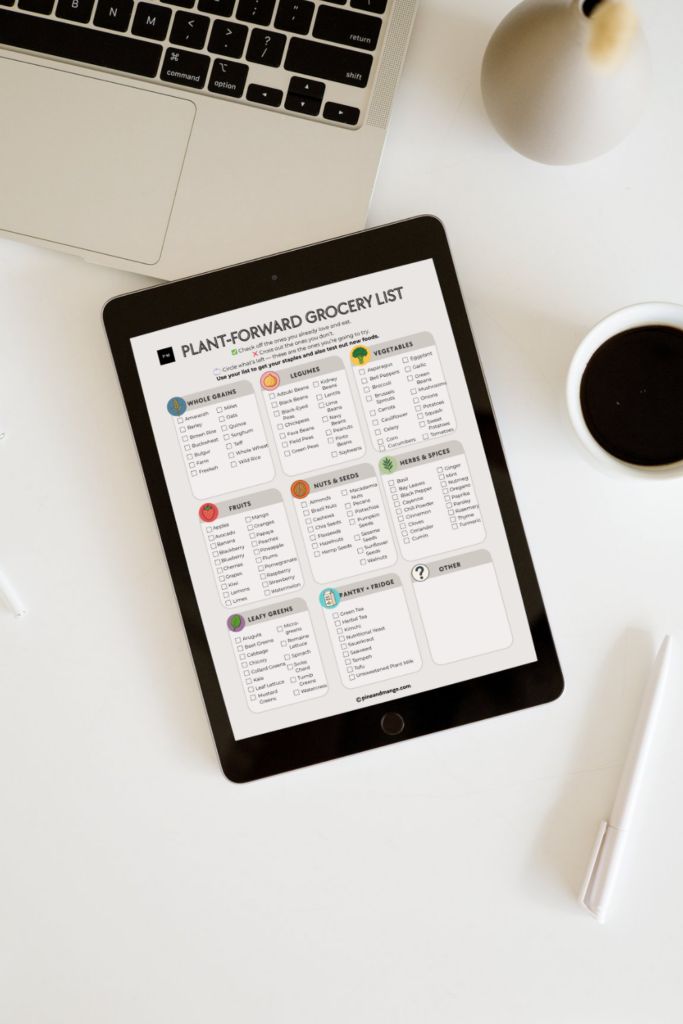
Get Your FREE Plant-Forward Grocery List Today!
Eating Well at Airports and on the Road

Here’s something nobody talks about: most airports now have way more plant-forward options than they did five years ago. You just have to know how to look.
At the airport:
- Grab a smoothie with fruit and greens if there’s a juice bar.
- Look for Mediterranean spots, sushi counters, or Asian-inspired places. They almost always have rice, edamame, veggie rolls, or grain bowls.
- Even a basic burger place will usually do a veggie wrap or a side salad. Ask for it without the cheese and add extra avocado if they have it.
- Oatmeal at coffee shops is underrated. Top it with nuts and fruit and you’ve got a solid base.
On a road trip:
Look for local spots in small towns, not chains. A local diner is often more willing to make you a simple plate of veggies, beans, and rice than a fast-food chain.
Grocery stores are your best friend. Seriously. Pull over at a Trader Joe’s, Aldi, Sprouts, or even a regular grocery store.
You can build a meal from the produce section, grab hummus and veggies, pick up a bag of nuts, and be on your way in fifteen minutes.
Many gas stations now carry bananas, apples, and nuts. Not glamorous, but it works.
Navigating Restaurant Menus Like a Pro
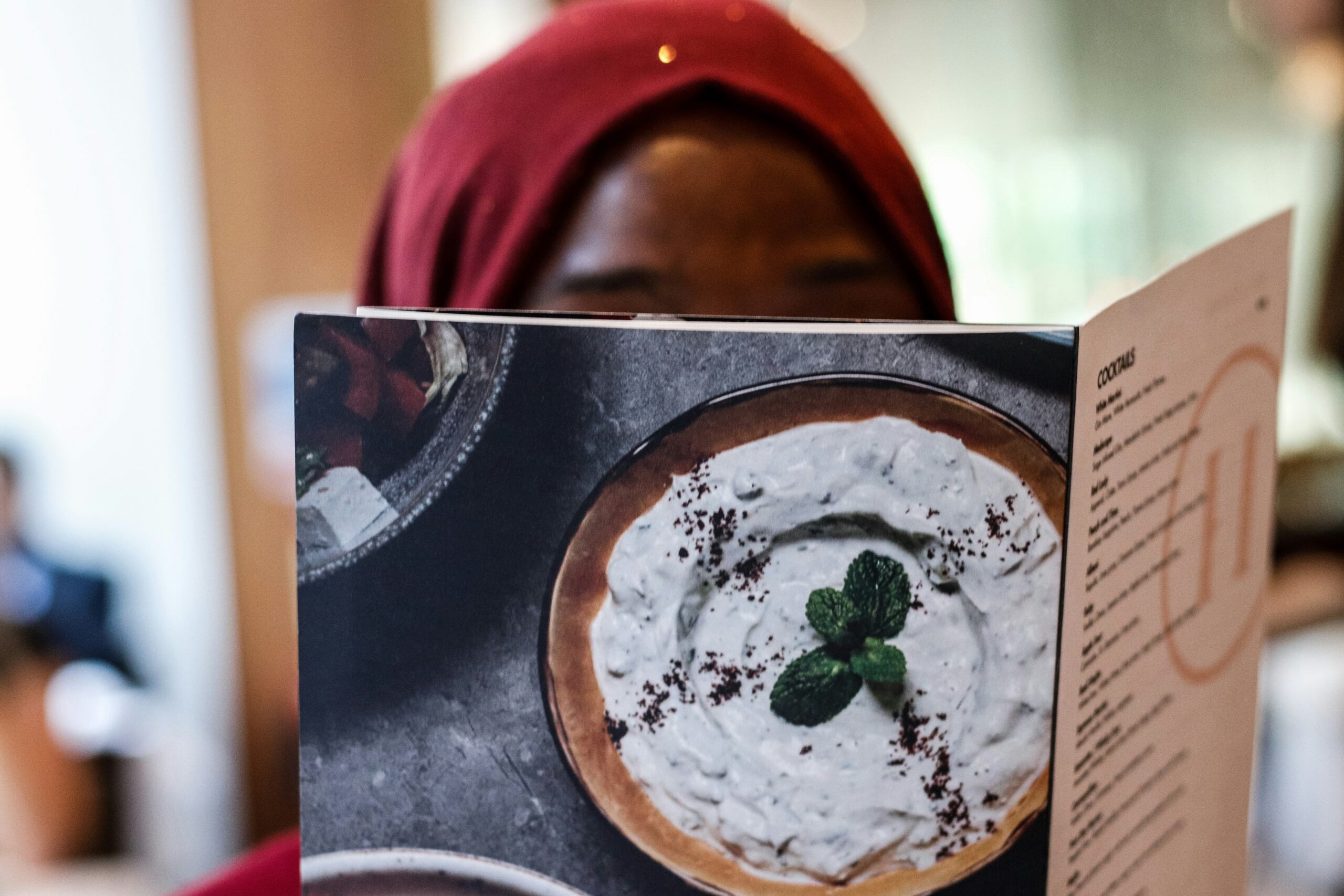
You don’t need a special plant-based menu to eat well at a restaurant. You need to know how to look at a regular menu through a different lens.
Scan for sides and ask if they can build a plate from them. Most kitchens will do this without blinking. A combination of roasted vegetables, beans or lentils, rice or quinoa, and a salad is a complete, satisfying meal.
You’re essentially applying the Meal Blueprint Method to whatever the kitchen already has.
A few other tricks:
- Ask what the soup of the day is. Bean or lentil soups are common, and they’re nourishing.
- Mexican restaurants are a goldmine: beans, rice, guac, salsa, grilled vegetables, corn tortillas. Easy.
- Indian restaurants typically have incredible plant-forward options: dal, chana masala, vegetable curries, basmati rice, naan.
- Thai restaurants almost always have tofu options, vegetable stir-fries, and rice or noodle dishes.
- Italian spots offer pasta with marinara, veggie pizzas, minestrone, and bruschetta.
Don’t be shy about asking your server. A quick “I’m focusing on more plant foods right now, what would you suggest?” goes a long way. Most people are genuinely happy to help.
Staying Nourished at Hotels

Hotels can feel like a food desert, but there are ways to work with what you’ve got.
If your room has a mini fridge, stop at a local grocery store when you arrive and stock it with: hummus, cut veggies, fruit, plant milk (for your morning coffee or oatmeal), and maybe some overnight oats you can prep the night before.
Hotel breakfast buffets almost always have: oatmeal, fresh fruit, peanut butter, whole grain toast, orange juice. You can build a real breakfast from those pieces. Skip the pastry table and hit the fruit station first.
And honestly, this might sound low-key, but having a good breakfast sets the tone for the whole day. When you start nourished, you make better food choices the rest of the day. It really does work that way.
FAQs About Plant-Based Traveling
Q: What if I’m traveling somewhere with very limited food options?
That’s where your snack kit earns its keep. If you’ve packed nuts, fruit, nut butter, and a few bars, you can bridge any gap.
You’re not going to eat perfectly at every meal, and that’s okay. Focus on adding what you can at each meal and rely on your snacks to fill in the rest.
Q: How do I stay hydrated while traveling?
This one gets overlooked. Flying is dehydrating, and so is being in a new climate.
Carry a refillable water bottle and aim to drink more than you think you need. Coconut water is great if you can find it.
Fruit also has a high water content, so those snacks pull double duty.
Q: Is it expensive to eat plant-forward while traveling?
It can be, but it doesn’t have to be.
Grocery stores beat restaurants on price every time. Beans, rice, fruit, oats, and nuts are among the most affordable foods on the planet.
Planning ahead, packing your own snacks, and shopping at a grocery store when you arrive will always cost less than eating at restaurants three times a day.
📖 Good Reads: How Not to Die, The China Study and Plant-Based Nutrition

In Essence: Prepare But Be Flexible
Traveling and staying plant-forward don’t have to be at war with each other. Once you’ve done it a couple of times, it starts to feel second nature.
You’ll spot the grocery store automatically, scan a menu differently, and have your snack kit ready before you even think about packing your suitcase.
The goal was never to eat perfectly. It was always to keep nourishing your body, wherever life takes you.
And you can absolutely do that, even at an airport, even at a roadside diner, even in a hotel room with a mini fridge and some overnight oats.
Give yourself grace. Pack the snacks. Find the grocery store. And trust that your body appreciates every plant food you give it, no matter where you are.
⭐ Let’s chat: Tell me about your travel food wins (or struggles)! Have you figured out a go-to move when you’re on the road and trying to eat well? Share it in the comments below — your tip might be exactly what someone else needs to hear.