This post may contain affiliate links. If you purchase through these links, I may earn a small commission at no extra cost to you. This helps keep Pine+Mango running. Thank you for your support! Read our full disclosure here.
You bookmark another salad dressing recipe, but the store doesn’t have the specialty vinegar.
So, you give up and grab the bottle from the store—loaded with sugar, seed oils, and ingredients you can’t pronounce.
What if salad dressing wasn’t a recipe at all? What if it was just a formula you could remix anytime with whatever’s in your kitchen?
That’s what you’re about to learn. A simple framework that works whether you’re meal prepping for the week or throwing together a quick lunch.
No measuring spoons. No stress. Just dressing that makes vegetables taste so good you’ll actually crave them.
Let’s build your salad dressing.
Subscribe to Our Nourished Newsletter
Get free weekly guidance for your plant-based journey, straight to your inbox.
Why This Formula Works
Traditional recipes lock you into exact measurements and specific ingredients.
This formula gives you freedom.
No tahini? Use almond butter. Out of lemon? Apple cider vinegar works. Hate maple syrup? Leave it out or use a date.
The “I don’t have that ingredient” anxiety disappears when you understand the structure instead of following someone else’s rules.
Just 4 components + Your choices = Food that works for YOUR life.
🌿 A Quick Note:
This blueprint is about adding more plant foods to your life, not restricting what you already enjoy.
Love a creamy ranch with dairy? Keep it. But maybe try a cashew-based version alongside it and see how your body feels.
Pack your salads with colorful vegetables, hearty beans, crunchy seeds—and drizzle them with dressing that actually nourishes you.
It’s about abundance: more nutrition, more flavor, more of what makes you feel good.
Why Homemade Dressing Works For Your Body
Store-bought dressings are sneaky sources of inflammatory oils, added sugars, and preservatives that work against your health goals.
Making your own puts you back in control.
When you build dressing from whole plant foods, you get:
- Healthy fats (from tahini, nuts, seeds, olive oil) for hormone balance, nutrient absorption, and lasting satisfaction
- Antioxidants (from herbs, garlic, citrus) to fight inflammation and support immune health
- Enzymes (from raw ingredients like lemon juice) to aid digestion and help your body process all those beautiful vegetables
- Zero hidden junk—just real ingredients your body recognizes and knows how to use
This isn’t just topping for lettuce. It’s nourishment that makes eating plants feel easy and delicious.
The Salad Dressing Formula
FAT BASE + ACID + FLAVOR + SWEETNESS (optional)
That’s it. Four components. Infinite combinations.
Let’s Break It Down
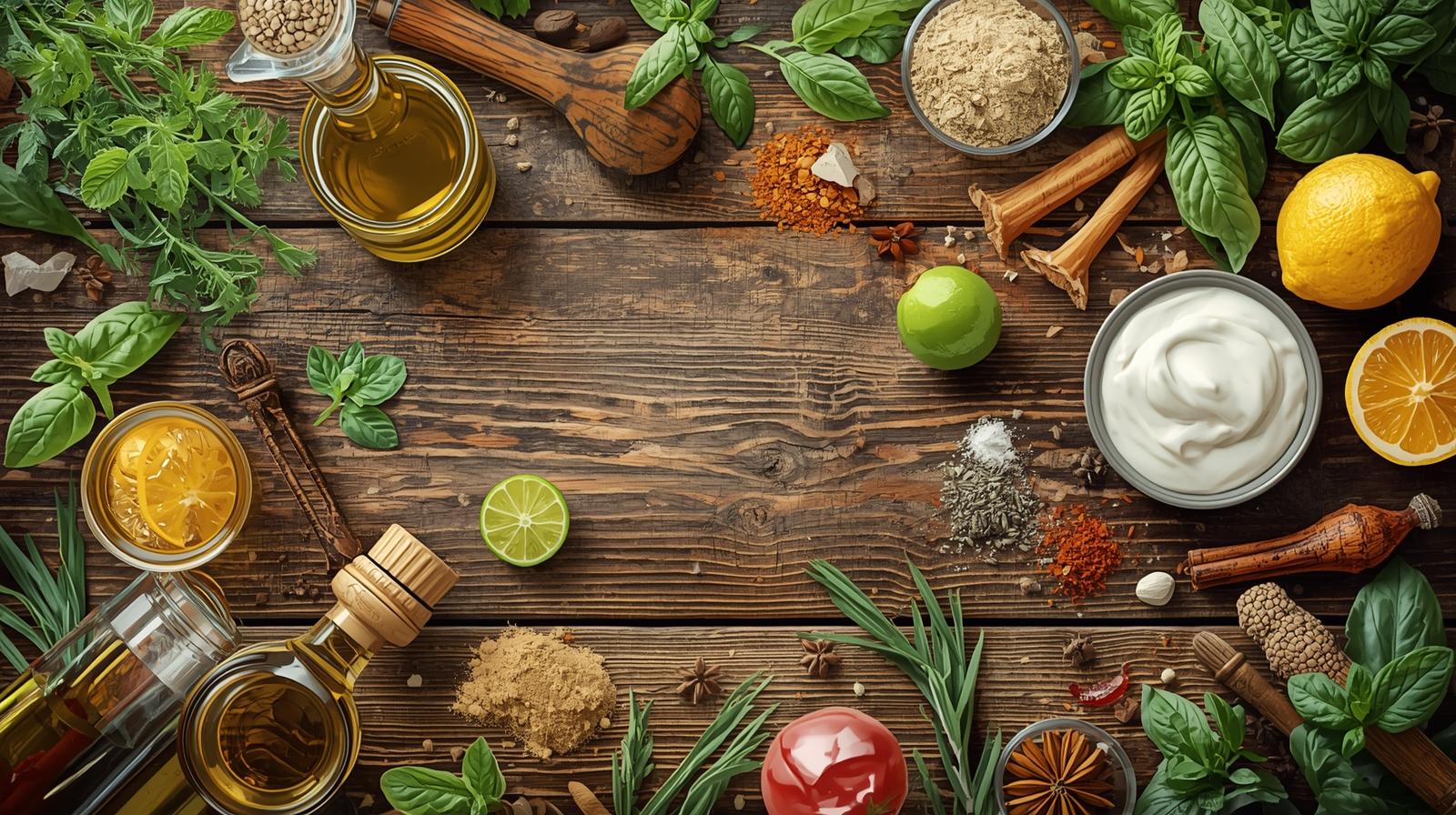
Component 1: Fat Base
This is your foundation—what makes dressing creamy, satisfying, and helps your body absorb all those fat-soluble vitamins from your greens.
- Tahini — Calcium and selenium for bone health, plus that rich, nutty depth
- Cashews (soaked and blended) — Creamy texture without oil, packed with copper and magnesium
- Olive oil — Heart-healthy monounsaturated fats with anti-inflammatory properties
- Avocado — Smooth, mild base loaded with potassium and fiber
💡 Pro Tip: Start with 2-3 tablespoons of your fat base. You can always add more liquid to thin it out, but you can’t take it back once it’s too runny.
Component 2: Acid
This is your brightness—what wakes everything up and balances the richness of your fat.
- Lemon juice — Fresh, clean zing with vitamin C to boost iron absorption from your greens
- Apple cider vinegar — Tangy and slightly sweet, supports healthy digestion
- Lime juice — Bright and citrusy, perfect for Mexican or Asian-inspired flavors
- Balsamic vinegar — Deep, slightly sweet complexity that pairs beautifully with robust greens
💡 Pro Tip: Taste as you go. Acid is powerful—start with 1 tablespoon and add more until it makes your taste buds wake up.
Build Your Plant-Based Blueprint for FREE Today!
Component 3: Flavor
This is your personality—what makes your dressing uniquely yours and keeps things interesting.
- Garlic — Immune-boosting sulfur compounds plus that savory punch we all crave
- Fresh herbs (basil, cilantro, dill) — Antioxidants and bright, fresh flavor that makes salads feel gourmet
- Dijon mustard — Helps emulsify your dressing while adding tangy depth
- Miso paste — Umami richness and gut-loving probiotics
💡 Pro Tip: Dried herbs work too, but use about half the amount since they’re more concentrated. And always add a pinch of salt—it makes every other flavor come alive.
Component 4: Sweetness (Optional)
This is your balance—a touch of sweet rounds out sharp or bitter flavors and makes everything harmonious.
- Maple syrup — Gentle sweetness with trace minerals
- Dates (1-2, pitted and blended) — Natural fiber-rich sweetness that keeps dressing creamy
- Orange juice — Citrus sweetness plus extra vitamin C
- Skip it entirely — Many dressings don’t need sweetness at all
💡 Pro Tip: If your greens are bitter (like arugula or radicchio), a tiny bit of sweetness makes them more enjoyable. Start with ½ teaspoon and taste.
Putting It All Together
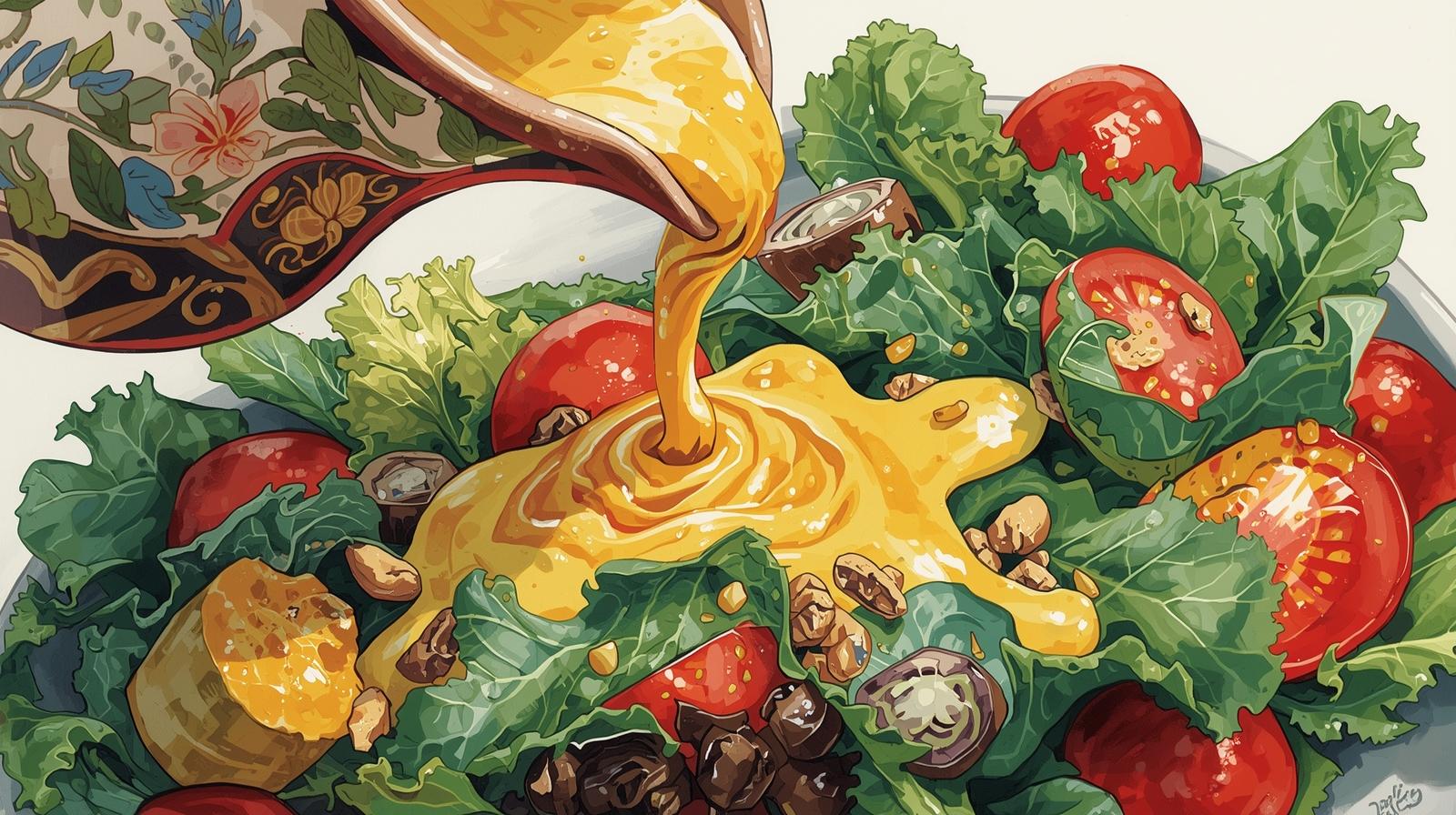
A few quick tips to make your dressing amazing:
- Blend or whisk? — Blending creates silky, emulsified dressing. Whisking works for simpler oil-based versions.
- Thin it out — Add water, plant milk, or more acid one tablespoon at a time until you hit your perfect consistency.
- Let it sit — Flavors meld and deepen after 10-15 minutes. Make it ahead if you can.
- Store smart — Glass jars in the fridge keep dressing fresh for 5-7 days. Shake before using.
- Taste and adjust — Too sharp? Add sweetness or fat. Too bland? More acid or salt. Trust yourself.
Need Ideas? Try These Combos
The Classic Lemon-Tahini
Tahini + Lemon juice + Garlic + Maple syrup
Creamy, tangy, and nutty—pairs with literally everything from kale to quinoa bowls
The Creamy Balsamic
Cashews (blended) + Balsamic vinegar + Dijon mustard + Skip the sweetness
Thick, rich, and sophisticated—makes even iceberg lettuce taste fancy
FAQs
Q: “What if my dressing separates in the fridge?”
That’s completely normal, especially for oil-based versions. Just shake the jar for 10 seconds before using.
Adding a little mustard or tahini helps it stay emulsified longer.
Q: “Can I make a big batch or does it go bad?”
Make as much as you’ll use in a week. Fresh ingredients mean fresh flavor, and most homemade dressings stay vibrant for 5-7 days.
If it starts tasting dull or looks off, make a fresh batch.
Q: “Do I really need a blender for creamy dressing?”
Not always. Tahini-based dressings whisk smooth by hand.
For nut-based versions, a blender makes life easier, but you can also use pre-made nut butter thinned with water.

Your Turn
That’s your salad dressing blueprint.
No measuring cups or rules about what “has” to go together. No single “right way” to do this.
Pick your fat, pick your acid, throw in some flavor, adjust to taste.
Make it ten times this month and it’ll look different every time.
That’s the whole point—this is YOURS now.
Now go build your dressing. 💜
⭐ Let’s chat: What’s the most unexpected ingredient you’ve added to homemade dressing that turned out amazing?? Share in the comments below.