This post may contain affiliate links. If you purchase through these links, I may earn a small commission at no extra cost to you. This helps keep Pine+Mango running. Thank you for your support! Read our full disclosure here.
Ever stand in the grocery store, watching the total climb higher and higher, wondering how you’re supposed to eat healthy when everything costs so much?
I’ve been there. The stress is real, and it feels like you’re being asked to choose between your health and your bank account.
Guess what? Those rising food prices everyone’s dealing with? They’re actually making the case for eating more plants stronger than ever.
Research shows that switching to plant-based proteins like beans and lentils can lead to meaningful savings, with people following plant-based eating patterns cutting grocery costs by 19% compared with a Standard American eating pattern.
While meat and dairy prices keep climbing, beans, rice, oats, and seasonal produce remain some of the most affordable foods in the store.
I used to think eating more plants would break the bank, but the opposite happened. My grocery bills went down, and I stopped wasting money on things that sat in my fridge until they went bad.
This isn’t about being perfect or only shopping at fancy health food stores. It’s about practical solutions that work when money is tight and you still want to feel good in your body.
Subscribe to Our Nourished Newsletter
Get free weekly guidance for your plant-based journey, straight to your inbox.
- The Truth About Food Costs Right Now
- Your Essential Budget Shopping List
- Real Cost Comparison: Plant Foods vs. Animal Products
- Smart Shopping Strategies That Actually Work
- Simple Meal Planning for Beginners
- Stop Wasting Food (And Money)
- Cooking From Scratch: Where Real Savings Happen
- Sample Budget Meals (Under $2 Per Serving)
- The Foods You Can Skip (At Least For Now)
- Your First Week: A Practical Starting Plan
- FAQs About Eating Plant-Based On A Budget
- In Essence: Plants Are Affordable
- Subscribe to Our Nourished Newsletter
The Truth About Food Costs Right Now
Let’s get real about what’s happening at the grocery store. A recent survey found that 77% of U.S. adults feel grocery prices are too high, and 70% say meat is the item they spend the most money on.
The math is sobering. A pound of ground beef can easily cost $6-8 or more. Meanwhile, a pound of dried beans costs around $1-2 and gives you way more servings. Boneless chicken breast costs $3.20 per pound compared to a pound of firm tofu for $2.19.
But here’s the kicker: many people assume eating plant-based would only make things worse, with 61% believing it’s inherently more expensive than eating meat and dairy.
That belief is keeping people stuck in expensive eating patterns when they could be saving hundreds of dollars a year.
When you build meals around affordable staples like rice, beans, lentils, oats, and potatoes, your dollar stretches further. These foods are nutrient-dense, filling, and incredibly versatile.
Your Essential Budget Shopping List
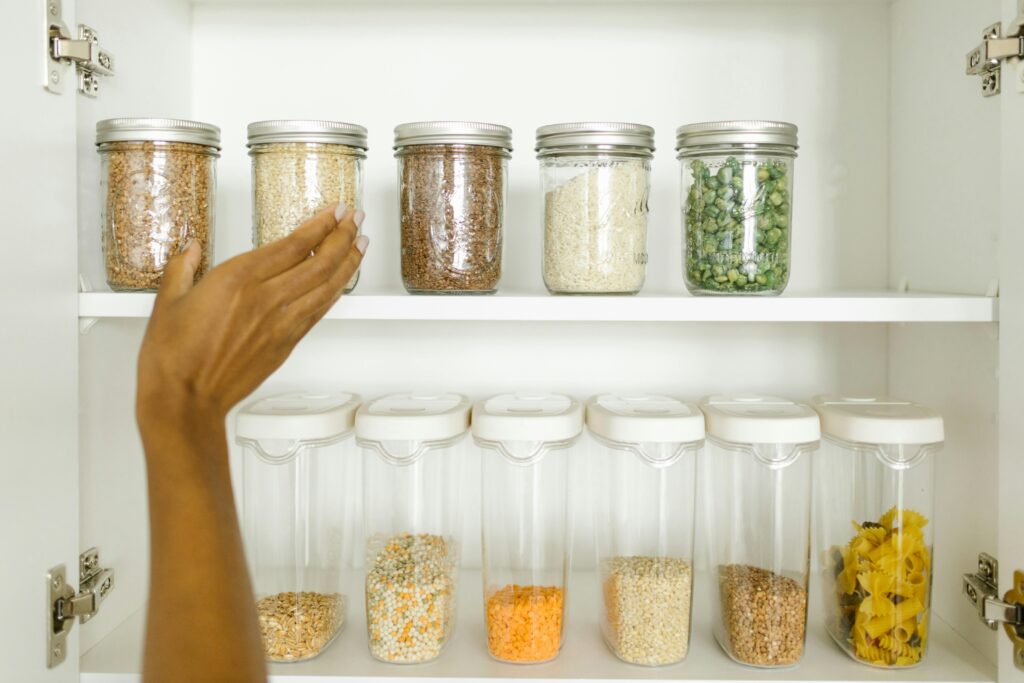
Here’s what actually saves money: focusing on whole plant foods instead of processed alternatives or animal products.
These are the workhorses that’ll carry you through the week without emptying your wallet.
Protein Powerhouses (Under $2 per pound)
- Dried beans and lentils – A one-pound bag of dried beans costs $1-2 and yields 6-7 cups cooked. That’s roughly 12-14 servings for less than the cost of a single serving of meat.
- Canned beans – If you forget to soak dried beans, canned beans cost about $0.80-1.20 per can and still beat meat prices.
- Split peas – Cook even faster than lentils, don’t need soaking, and cost about $1.50 per pound.
Grain Foundations (Pennies per serving)
- Brown rice – A bag of dried brown rice can stretch into a dozen meals for just a few bucks. Buy a 5-pound bag for around $4-6.
- Oats – A canister costs $3-4 and provides 30+ servings of breakfast. That’s about $0.10-0.13 per meal.
- Whole grain pasta – Goes on sale regularly for $1-1.50 per box. One box feeds 4-6 people.
Vegetable Staples
- Potatoes & sweet potatoes – When it comes to eating plant-based on a tight budget, potatoes are your best friend. A 5-pound bag costs $3-5 and provides filling meals for days.
- Carrots – One of the cheapest vegetables year-round. A 2-pound bag costs about $1.50.
- Cabbage – Costs $0.50-1.00 per pound, keeps for weeks, and works in everything.
- Onions – A 3-pound bag costs $2-3. They’re the flavor foundation for countless meals.
Frozen Essentials
- Frozen vegetables – Frozen veggies are picked and flash-frozen at peak ripeness, locking in nutrients. A bag costs $1-2 and nothing goes to waste.
Flavor Boosters
- Peanut butter – A jar costs $3-5 and lasts weeks.
- Canned tomatoes – Stock up when they’re on sale for $0.50-1.00 per can.
- Basic spices – Garlic powder, onion powder, cumin, chili powder, and Italian seasoning. Buy store brand.
👉🏿 For an expanded list, check out The Ultimate Plant-Based Grocery List for Beginners.
Real Cost Comparison: Plant Foods vs. Animal Products
Let’s break down what you’re actually spending per serving:
Protein Comparison:
- 1 lb ground beef ($7) = 4 servings = $1.75 per serving
- 1 lb dried black beans ($1.50) = 14 servings = $0.11 per serving
- 1 lb dried lentils ($1.80) = 14 servings = $0.13 per serving
- 1 block tofu ($2.19) = 4 servings = $0.55 per serving
Breakfast Comparison:
- Eggs (dozen at $2) = 6 breakfasts = $0.33 per breakfast
- Oatmeal ($3.50 canister) = 30 breakfasts = $0.12 per breakfast
Full Meal Comparison:
- Chicken breast dinner with rice and vegetables = $4-5 per serving
- Bean and rice bowl with roasted vegetables = $1-1.50 per serving
According to a 2024 study, people following plant-based eating patterns cut grocery costs by 19% compared with a Standard American pattern, translating to more than $650 per year in savings.
Smart Shopping Strategies That Actually Work
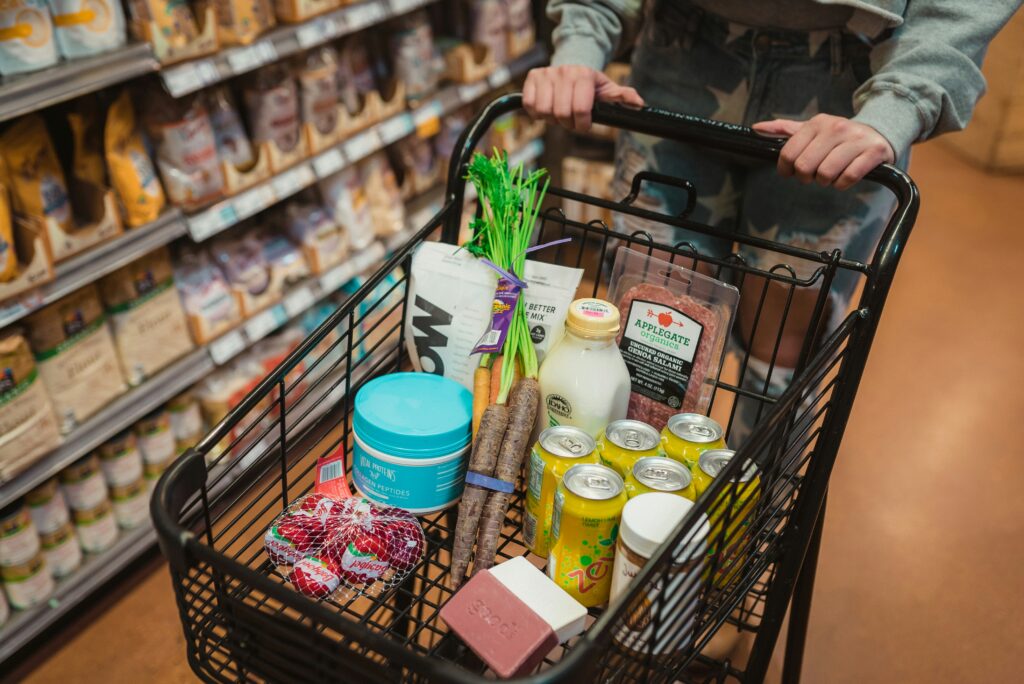
- Shop with a plan. When you know what you’re making for the week, you buy only what you need. No more “aspirational” vegetables that wilt in the crisper drawer while you feel guilty about wasting money.
- Buy in bulk when it makes sense. Dried goods like rice, beans, oats, and nuts are significantly cheaper in bulk. A 20-pound bag of rice costs about $15-20, while buying 1-pound bags would cost $30-40 for the same amount.
- Embrace frozen produce. Frozen fruits and vegetables are flash-frozen at the peak of freshness and don’t have any additives. They’re often cheaper, last longer, and there’s zero waste.
- Shop sales and stock up. When your staples go on sale, grab extra. Download major store apps for deal notifications. If pasta’s on sale for $0.88 instead of $1.50, get a few extra boxes.
- Compare unit prices. That bigger bag might look expensive, but check the per-ounce or per-pound price. You’ll often find the larger size costs less per serving.
- Shop seasonally. If you live in a place that snows in winter, go for seasonal produce like apples instead of strawberries; the berries will cost more out of season and won’t taste as good. Summer: Tomatoes, zucchini, corn, berries; Fall/Winter: Squash, cabbage, root vegetables, apples; Spring: Asparagus, peas, leafy greens.
- Don’t shop hungry. Seriously. You’ll end up with stuff you don’t need, and it’ll blow your budget every time.
Simple Meal Planning for Beginners

Meal planning sounds like a chore, but it’s actually what gives you freedom.
When you have a loose plan, you’re not staring into the fridge at 6 PM wondering what to make.
Start with 3-5 staple meals you actually enjoy
The best kind of plant-based approach is the one you’re actually going to eat, so start with your favorites and build meals around them.
Maybe that’s:
- Baked potatoes with toppings
- Rice and bean bowls
- Pasta with marinara and vegetables
- Oatmeal for breakfast
- Lentil soup
Think in building blocks, not rigid recipes.
A grain + a protein + vegetables + a simple sauce = infinite meal combinations.
Cook a big pot of rice and a batch of beans on Sunday. Roast a sheet pan of whatever vegetables are cheap this week. Now you have components you can mix and match.
- Monday: Beans and rice bowls with roasted veggies and salsa
- Wednesday: Same ingredients in a soup
- Friday: Throw it all in a tortilla
You’re eating different meals, but you only had to cook a few things.
Use leftovers strategically
Make extra dinner and eat it for lunch the next day. A lot of meal-prep meals can be frozen and reheated for later in the week or month.
Make a double batch of soup or chili. Freeze half.
Stop Wasting Food (And Money)
Food waste is basically throwing money in the trash. We’ve all done it, but when money’s tight, you can’t afford to.
#1: Use what you have first.
Before shopping, check what’s already in your kitchen.
That half-used can of tomato paste? Use it in your pasta sauce. Those wilting greens? Throw them in a smoothie or soup.
#2: Store food properly.
Keep potatoes in a cool, dark place. Store herbs in water like flowers.
If you have produce going bad, like a bruised pepper or soft strawberries, throw those in the freezer to save for later.
#3: Get creative with scraps.
Vegetable scraps make excellent broth. Make your own vegetable stock with scraps and peels of non-starchy vegetables: add 2 to 3 cups of veggie scraps to every gallon of water and season with salt.
Overripe bananas are perfect for smoothies. Stale bread becomes croutons or breadcrumbs.
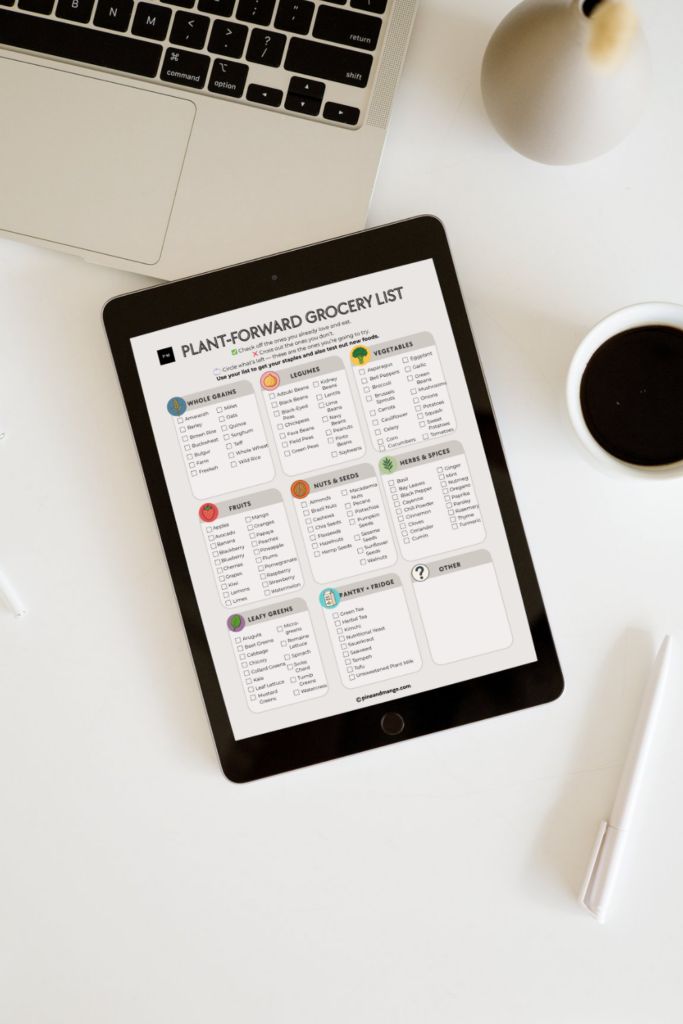
Get Your FREE Plant-Forward Grocery List Today!
Cooking From Scratch: Where Real Savings Happen
Dining out, no matter your approach, can cause a heavy dent in your bank account; you’ll get the most bang out of your buck by simply cooking and eating at home.
Cooking from scratch doesn’t have to mean spending hours in the kitchen.
A pot of lentil soup takes maybe 10 minutes of active work, then it just simmers. You end up with multiple servings for a few dollars.
- One-pot meals are game-changers. Soups, stews, curries, and chilis are forgiving, require minimal cleanup, and stretch your ingredients. You can load them with whatever vegetables you have and they always turn out delicious.
- Batch cooking multiplies your efforts. Cooking in bulk saves more than time. It saves you from impulse takeout orders and repeated grocery runs. Make a huge pot of soup or chili on Sunday. Large batches freeze beautifully and stretch across the week.
Sample Budget Meals (Under $2 Per Serving)
Breakfast Ideas:
- Oatmeal with banana and peanut butter ($0.50)
- Overnight oats with frozen berries ($0.75)
Lunch Ideas:
- Bean and rice bowl with salsa and frozen corn ($1.25)
- Lentil soup with crackers ($1.00)
- Pasta salad with canned chickpeas ($1.50)
Dinner Ideas:
- Baked potato bar with black beans and frozen broccoli ($1.75)
- Rice and bean burrito bowls with roasted vegetables ($1.50)
- Pasta with marinara, white beans, and frozen spinach ($1.25)
- Lentil curry over rice with frozen mixed vegetables ($1.80)
- Sweet potato and chickpea stir-fry over brown rice ($1.90)
All of these meals are filling, nutritious, and cost less than a fast-food value meal.
The Foods You Can Skip (At Least For Now)
When money’s tight, there are certain things you just don’t need.
You don’t need:
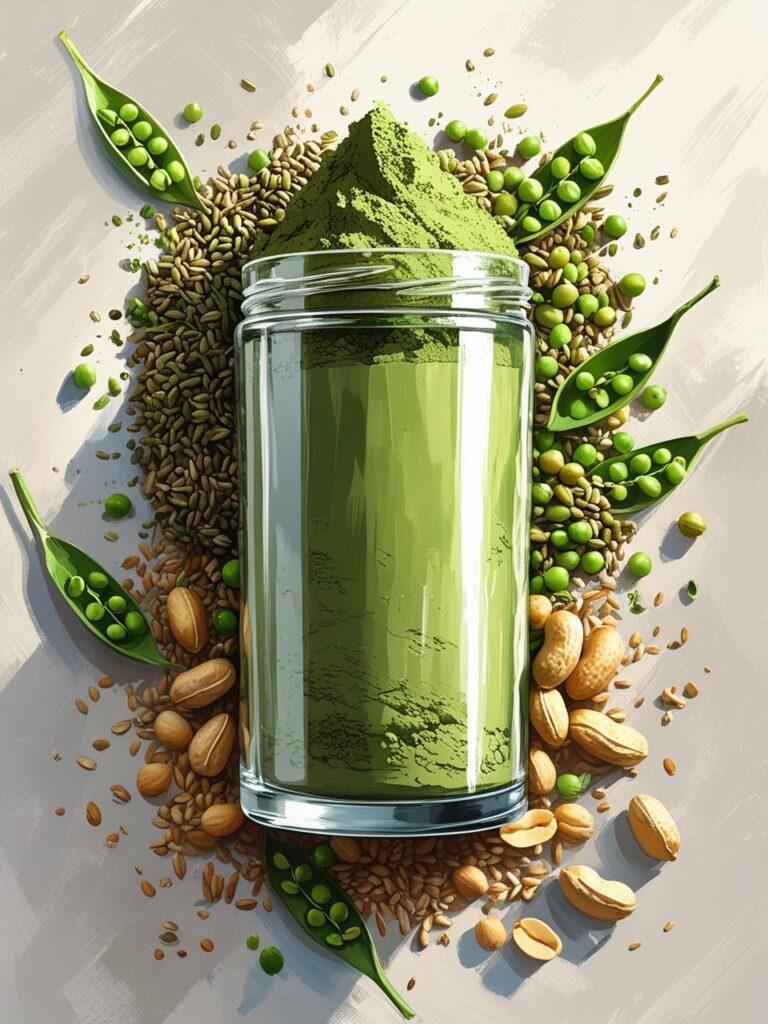
- Expensive superfood powders
- Specialty meat alternatives (they’re convenient but pricey)
- Out-of-season produce flown in from across the world
- Individual serving packages of anything
- Organic everything (if you can only afford some organic items, prioritize the “dirty dozen” produce)
- Fancy plant-based cheeses and yogurts
- Pre-cut vegetables (you’re paying for convenience)
Products like specialty nuggets and frozen entrees can be fun and convenient, but they’re often priced like luxury goods, and if you rely on them daily, the costs rack up fast.
Focus on the basics that give you the most nutrition and versatility for your dollar.
Your First Week: A Practical Starting Plan
Grocery List (Under $40):
- 2 lbs dried beans ($3)
- 5 lbs brown rice ($5)
- 5 lbs potatoes ($4)
- 3 lbs sweet potatoes ($4)
- 2 lbs carrots ($2)
- 1 head cabbage ($1.50)
- 3 lbs bananas ($2)
- Old-fashioned oats ($3.50)
- Peanut butter ($4)
- 4 cans diced tomatoes ($3)
- Frozen broccoli ($2)
- Frozen spinach ($2)
- Whole grain pasta ($1.50)
- Basic spices ($3)
Sunday Prep (1-2 hours):
- Cook a big pot of brown rice (store in fridge)
- Cook 2 pounds of dried beans (freeze half)
- Chop onions, carrots, and celery
- Wash and prep any greens
Simple Meal Rotation:
- Breakfast: Oatmeal every day (add banana, peanut butter, frozen berries)
- Lunch: Bean and rice bowls with different toppings
- Dinner: Rotate between pasta with vegetables, baked potatoes, stir-fries, and soups
This gives you 21 meals for one person for under $40, or about $1.90 per meal.
FAQs About Eating Plant-Based On A Budget
Q: Isn’t eating healthy supposed to be expensive?
Not when you focus on whole plant foods. The expensive part of “healthy eating” usually comes from specialty products, organic everything, and trendy superfoods.
Rice, beans, oats, potatoes, and seasonal produce are some of the cheapest foods available.
The research proves it: eating plant-based can cut grocery costs by 19% compared to conventional eating patterns.
Q: How do I get enough variety without spending more money?
Variety comes from how you season and combine your staples, not from buying lots of different ingredients. A few basic spices and cooking methods can transform the same ingredients into completely different meals.
Beans and rice in a bowl Monday, in a soup Wednesday, in a wrap Friday. Same ingredients, different experiences.
Q: What if I don’t have time to cook everything from scratch?
Start small. Cook one big pot of something on the weekend and eat it throughout the week. Use frozen vegetables that are already chopped. Keep canned beans on hand for when you’re tired.
Simple meals like baked potatoes or oatmeal take almost no time. Even replacing a few convenience meals with simple home-cooked options will save money and help you feel better.
📖 Good Reads: How Not to Die, The China Study and Plant-Based Nutrition
In Essence: Plants Are Affordable
Eating plant-based on a tight budget isn’t just possible—it’s one of the smartest financial and health decisions you can make right now.
Research proves that eating this way can save you hundreds of dollars per year, all while nourishing your body with filling, satisfying meals.
This isn’t about perfection or buying everything organic from specialty stores. It’s about being smart with your money while nourishing your body with real food.
Focus on the basics: beans, rice, oats, potatoes, and seasonal produce. Plan your meals loosely, cook simple dishes, and stop wasting food.
You don’t need fancy ingredients or complicated recipes. You need staples you can rely on and the knowledge that simple meals can be deeply satisfying.
Start with one or two changes that feel manageable. Maybe it’s swapping one meat-based meal for beans this week, or buying dried beans instead of canned.
Your health and your budget will both thank you. And once you experience how good it feels to eat nourishing food without the financial stress, you’ll wonder why you didn’t start sooner.
The food that makes your body feel its best doesn’t have to cost a fortune. It never did.
⭐ Let’s chat: What’s your favorite budget-friendly meal that makes you feel truly nourished? Drop your go-to recipe in the comments—we all need more ideas for eating well without spending a fortune!